


The AI Creative Director A New Guide for Marketing Leaders
September 03, 2025
AI is no longer a concept for the future; it’s an active, and often unacknowledged, participant in today’s high schools. The question has shifted from if it will have an impact to how we will navigate its presence to foster both learning and integrity.
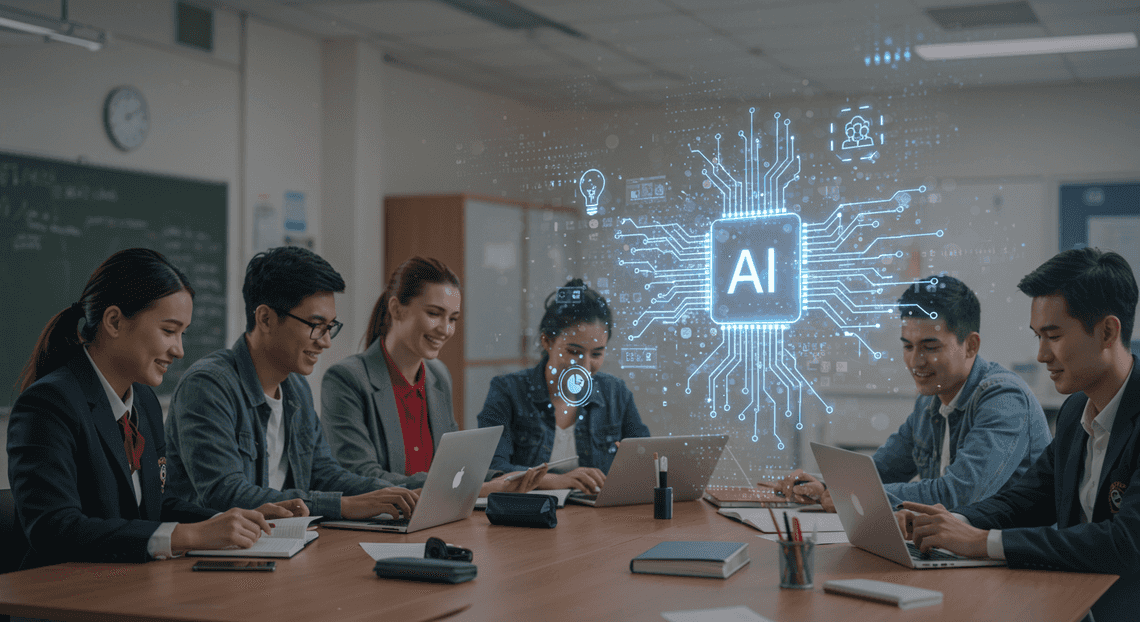
Artificial Intelligence is no longer a far-off concept from science fiction novels or a niche topic reserved for university computer science labs. It has arrived, quietly and decisively, in the hallways and on the screens of today’s high schools. Whether it’s the algorithm suggesting videos on a research platform, the grammar-checking tool polishing an essay, or the generative chatbot helping to brainstorm a project outline, AI is an active, and often unacknowledged, participant in modern education. The question is no longer if AI will impact high school, but how we will navigate its presence to foster learning, integrity, and readiness for a transformed world.
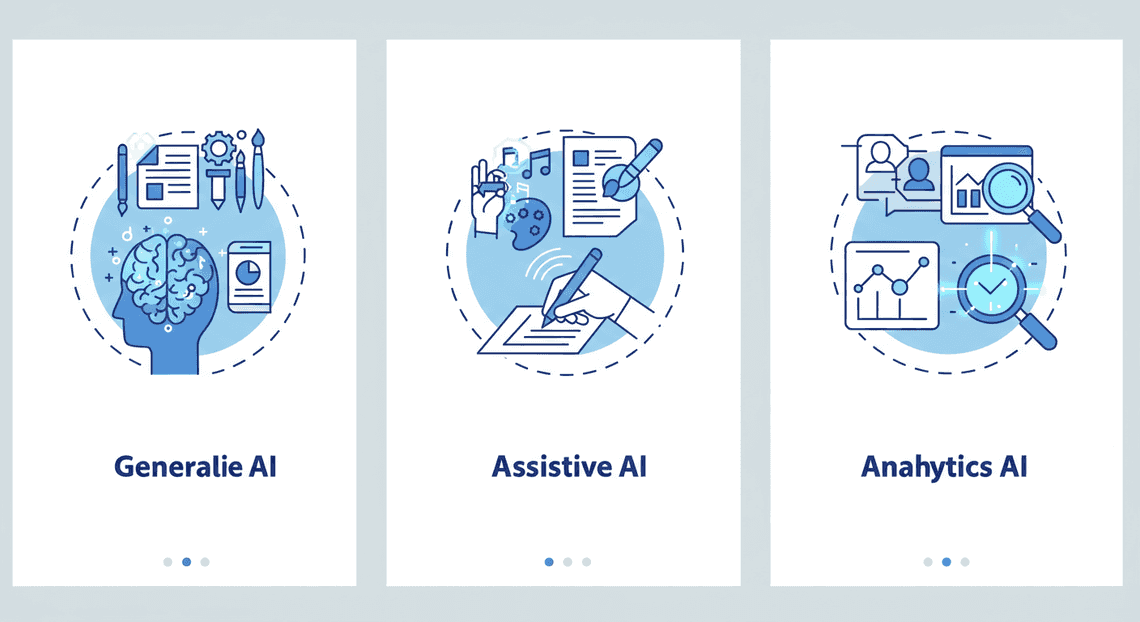
The term “Artificial Intelligence” can be intimidating, conjuring images of complex algorithms and sentient machines. For the classroom, however, it’s more practical to think of AI in terms of its function. When we talk about AI in high school, we’re generally referring to a few key categories of tools:
Generative AI: This is the category currently dominating the conversation. These are tools designed to create new content based on user prompts. This includes Large Language Models (LLMs) like ChatGPT that generate text, as well as platforms that produce images (Midjourney), code (GitHub Copilot), and even music. They act as powerful brainstorming partners, writing assistants, and creative engines.
Assistive AI: These tools are designed to augment and support human tasks, rather than replace them. Think of them as “smart” assistants. Advanced grammar and style checkers like Grammarly, adaptive learning platforms that adjust difficulty based on a student’s performance, and sophisticated research tools that summarize articles or find relevant sources all fall under this umbrella.
Analytical AI: This type of AI excels at identifying patterns and insights within large sets of data. In an educational setting, this could be software used by a school district to identify learning trends or by a student in a statistics class to analyze a complex dataset for a science fair project. It’s about using machine intelligence to make sense of information at a scale humans cannot easily achieve.
Understanding these distinctions is the first step.
Ignoring the rise of AI is not a viable strategy; it’s a missed opportunity and a potential pitfall. The dialogue about AI’s role in education must happen now, with urgency and intention, for several critical reasons:
Inevitability and Ubiquity: AI tools are accessible, often free, and deeply integrated into the digital platforms students already use. A policy of simply banning them is not only difficult to enforce but also mirrors the failed “ban the calculator” or “ban the internet” debates of the past. The technology is here, and its accessibility will only grow. Proactive engagement is our only logical path forward.
Redefining Academic Integrity: The very concept of plagiarism and original work is being challenged. We must collectively establish new ethical goalposts. What constitutes cheating versus resourceful use of a tool? How can assignments be designed to assess critical thinking and understanding, rather than just the final written output? Without clear guidance from educators, students are left to navigate a moral gray zone alone.
**Preparing for the Future of Work: AI literacy is rapidly becoming a fundamental skill, as essential as digital literacy was two decades ago. The jobs of tomorrow will not just be in AI, but with AI. Students need to learn how to collaborate with AI systems—how to write effective prompts, critically evaluate AI-generated content for bias and inaccuracy, and leverage these tools to solve complex problems more efficiently. Failing to teach these skills is a failure to prepare them for their future careers and civic lives.
The Risk of an Equity and Skills Gap: If schools do not formally integrate AI education, a new divide will emerge. Students with access and knowledge at home will learn to leverage these powerful tools, while others will be left behind. A proactive, school-led conversation ensures that all students have the opportunity to develop the critical AI literacy they will undoubtedly need, ensuring a more equitable foundation for success.
Artificial intelligence is no longer a futuristic concept; it’s a present-day reality poised to fundamentally reshape the educational landscape. For high schools, AI represents a powerful catalyst for moving beyond traditional, one-size-fits-all instructional models. By leveraging machine learning, natural language processing, and data analytics, AI offers a suite of tools that can create more adaptive, efficient, and relevant learning experiences. It’s not about replacing the invaluable human connection between teachers and students, but about augmenting it, unlocking potential that was previously constrained by the practical limits of time and resources.
The quintessential challenge in any classroom is catering to a diverse range of learning speeds, styles, and interests. AI directly addresses this by enabling true personalization at scale.
Adaptive learning platforms, powered by sophisticated algorithms, can assess a student’s knowledge in real-time. As a student works through a math problem set or a grammar exercise, the AI analyzes their responses—not just whether they are right or wrong, but the nature of their mistakes. Does a student consistently struggle with quadratic equations but excel at geometry? The system can dynamically adjust the difficulty and focus, providing targeted remediation on weaker topics while offering advanced challenges in areas of strength.
This creates a unique educational journey for every individual. A student who is passionate about marine biology could receive AI-curated articles, videos, and virtual labs on ocean acidification, while their classmate is guided through a different set of resources focused on genetics. This model fosters deeper engagement by connecting curriculum to individual interests and ensures that no student is left behind or held back by the pace of the median learner. The result is a more equitable and effective environment where students can build confidence and achieve mastery at their own speed.
One of the most significant—and immediate—benefits of AI in schools is its ability to liberate teachers from the burden of repetitive, administrative tasks. The goal of AI is not to replace educators but to empower them to do what they do best: inspire, mentor, and teach.
Consider the hours teachers spend on grading. AI can automate the assessment of multiple-choice quizzes, fill-in-the-blank questions, and even complex mathematical equations, providing instant feedback to students and a comprehensive performance summary for the teacher. This reclaimed time can be reinvested into higher-impact activities, such as designing creative project-based assignments, facilitating Socratic seminars, or providing in-depth, one-on-one support to a struggling student.
Furthermore, AI tools can act as an analytical co-pilot for educators. By analyzing class-wide performance data, an AI system can identify common misconceptions or flag students who are at risk of falling behind before their struggles become critical. This allows for proactive, data-informed interventions. On the administrative front, AI can streamline everything from creating complex master schedules to managing resources and automating parent communications through intelligent chatbots, making the entire school ecosystem more efficient and responsive.
Beyond its role as an instructional and administrative tool, AI is also a critical subject of study in itself. To prepare students for a future where AI is ubiquitous in both work and daily life, high schools must cultivate a new set of core competencies.
First and foremost is AI literacy. Students need a foundational understanding of what AI is, how machine learning models are trained, and the ethical implications of algorithmic bias. Integrating these concepts into computer science, social studies, and ethics classes creates informed digital citizens who can critically evaluate the AI systems they interact with every day.
Second is the skill of human-AI collaboration. The future of knowledge work will increasingly involve partnering with AI. Learning to craft effective prompts for generative AI models is a modern form of critical thinking, teaching students how to ask precise questions, evaluate outputs, and synthesize information. Using AI as a brainstorming partner for an essay, a debugging assistant for a coding project, or a research summarizer teaches students to leverage technology as a powerful cognitive tool. This collaborative skill set—knowing when to trust an AI’s output and when to challenge it—will be invaluable in a wide range of future careers, from marketing and design to engineering and scientific research.
While the potential of AI in the classroom is undeniably exciting, we can’t navigate this new landscape with blind optimism. Like any powerful tool, AI comes with a set of significant challenges that students, educators, and parents must understand and confront head-on. Ignoring these risks isn’t an option; addressing them is crucial to ensuring that AI becomes a force for genuine learning and growth, not a source of inequity and unintended consequences.
The moment AI enters the classroom, it brings a suitcase full of ethical questions. At the top of the list is the issue of algorithmic bias. AI models are trained on vast datasets of human-created content, and if that data reflects historical biases, the AI will learn and perpetuate them. Imagine an AI-powered grading tool trained primarily on essays from a single demographic. It might inadvertently penalize students who use different dialects or cultural references, not because their writing is poor, but because it deviates from the pattern the AI was taught to recognize as “good.” This isn’t a hypothetical; it’s a core challenge in machine learning that can lead to unfair assessments and reinforce systemic inequalities.
Then there’s the ever-present question of academic integrity. With generative AI, a student can produce a well-structured, grammatically correct essay on Macbeth in seconds. This forces us to ask:
What constitutes cheating? Is using AI to brainstorm ideas acceptable? What about using it to write a first draft? Or to polish a final paragraph? The lines are blurrier than ever.
How do we assess true understanding? If the final product is polished by a machine, how can a teacher gauge a student’s actual grasp of the material, their critical thinking, and their unique voice?
What is the value of the process? The struggle of finding the right words and structuring an argument is where much of the learning happens. If AI shortcuts that process, are we short-circuiting learning itself?
Beyond the ethics of use, there’s the critical issue of data privacy. When students interact with AI tools, especially free ones, they are feeding the machine. Every prompt, every query, and every piece of uploaded text can be used to train future versions of the model. Schools and students must be vigilant about what information is being shared. Who owns the data from a student’s chat with an AI tutor? How is that data being stored and protected? This digital footprint is persistent, and without clear guidelines and digital literacy, students may be unknowingly trading their personal data for academic assistance.
The promise of AI as a great equalizer in education is threatened by a familiar foe: the digital divide. This gap, however, is no longer just about who has a laptop and who doesn’t; it has evolved into a more complex, multi-layered problem.
First is the access divide. Running sophisticated AI models or participating in AI-driven virtual labs requires significant computing power and high-speed, reliable internet—luxuries not available to every student. A student struggling with a spotty connection at home is at an immediate disadvantage compared to a peer with a seamless setup.
Second is the skills divide, or a gap in AI literacy. Students in well-resourced schools may receive formal instruction on how to use AI tools effectively and ethically. They’ll learn the art of “prompt engineering” to get nuanced results and be taught to critically evaluate AI-generated content. Meanwhile, students in under-resourced schools may be left to their own devices, using the tools inefficiently or falling prey to their pitfalls, like misinformation. This doesn’t close the achievement gap; it widens it with a new set of 21st-century skills.
Finally, there is a growing economic divide. While many basic AI tools are free, the most powerful and specialized versions often sit behind a paywall. Premium AI tutors, advanced data analysis tools, and top-tier generative models can offer a significant competitive edge in everything from writing college essays to completing complex STEM projects. This creates a “pay-to-succeed” dynamic, where students from more affluent families can afford superior digital assistance, further entrenching socioeconomic disparities in academic outcomes. The homework gap is officially on steroids.
Perhaps the most insidious risk of AI in education is the potential for it to make us intellectually lazy. The human brain, like a muscle, grows stronger through exercise—through struggle, trial, and error. When we outsource our cognitive heavy lifting to AI, a phenomenon known as cognitive offloading, we risk the atrophy of essential skills.
Consider the foundational skill of writing. The process of writing is the process of thinking. It’s how we learn to structure an argument, weigh evidence, and find our own voice. If a student consistently relies on AI to generate drafts or even just to “fix” their sentences, they may never develop the mental architecture for clear, persuasive communication. They learn how to prompt, but not how to write.
The same danger applies to problem-solving. A student stuck on a complex physics problem could ask an AI to “show the steps.” While this might get them the right answer, it robs them of the invaluable experience of grappling with the problem, trying different approaches, and achieving that “aha!” moment of genuine understanding. The struggle is the lesson. By providing instant solutions, AI can inadvertently teach students to seek answers rather than build understanding.
Furthermore, an over-reliance on AI can erode research and critical evaluation skills. Large language models are notorious for “hallucinating”—confidently stating falsehoods as facts. A student who unconditionally trusts an AI’s output without cross-referencing sources or questioning the information is not learning to be a discerning digital citizen. They are learning to be a passive consumer of machine-generated content, a dangerous habit in an age of rampant misinformation. The ability to vet sources, identify bias, and synthesize information from multiple places is a cornerstone of learning, and it’s a skill that AI, in its current form, can easily undermine.
The arrival of generative AI in the classroom isn’t a technical upgrade; it’s a cultural one. Simply purchasing a software license or unblocking a website is a recipe for chaos. A successful, sustainable, and ethical integration of AI requires a deliberate and collaborative blueprint—a shared vision built not on directives, but on dialogue. This framework is less about managing a tool and more about nurturing a new kind of learning ecosystem where technology serves pedagogy, not the other way around.
AI integration cannot be a top-down mandate. Its success hinges on a partnership where every stakeholder has a clear role, a voice, and a responsibility. This collaborative approach transforms the challenge from “How do we control this?” to “How do we build this together?”
Students as Co-Architects: The most profound shift is viewing students not as passive consumers of AI-driven education but as active participants in its design. Their role is to be curious explorers and critical testers. They are the ones who will discover novel applications, push the boundaries of AI tools, and provide invaluable feedback on what works and what doesn’t. Schools should empower them to lead AI ethics clubs, participate in panels that draft usage policies, and present their findings to faculty. Their responsibility is to learn the difference between using AI as a powerful collaborator and using it as a shortcut that circumvents learning.
Teachers as Navigators and Curators: Teachers are not expected to become prompt engineers or data scientists overnight. Their primary role is to be the pedagogical expert—the guide who curates learning experiences that AI can enhance but never replace. This means designing assignments that challenge students to use AI for brainstorming, data synthesis, or first-draft generation, and then apply uniquely human skills like critical analysis, ethical reasoning, and creative synthesis to the output. Their responsibility is to model intellectual curiosity and responsible use, fostering a classroom environment where asking “How can this tool help us think deeper?” is more important than asking “What’s the right answer?”
Parents as Home-Front Partners: The conversation about AI cannot stop at the school doors. Parents are essential partners in reinforcing the principles of digital citizenship and academic integrity. Their role is to be informed and engaged, discussing the capabilities and ethical pitfalls of AI with their children just as they would any other aspect of online life. Schools can support them by hosting workshops on AI tools, providing conversation starters about topics like bias and plagiarism, and maintaining open lines of communication about the school’s AI policies. Their responsibility is to help their children build a healthy, balanced relationship with technology, grounding its use in the family’s core values.
Beyond individual roles, schools must foster a pervasive culture of AI literacy. This goes deeper than knowing how to write a prompt. True literacy is the ability to understand, critique, and creatively apply AI systems. It involves knowing what happens “under the hood” at a conceptual level, recognizing the potential for bias in algorithms, and understanding the societal impact of these powerful technologies.
Building this culture requires a multi-pronged approach:
Integrate, Don’t Isolate: Resist the urge to create a single, siloed “AI 101” course. Instead, weave AI literacy across the entire curriculum. In a history class, students can analyze how an AI’s training data might create a biased historical narrative. In science, they can use AI to model complex data sets and then critique the model’s limitations. In art, they can co-create with image generators and explore questions of authorship and creativity.
Establish Clear, Evolving Guardrails: Every school needs a dynamic Acceptable Use Policy (AUP) for AI, developed with input from teachers, students, and parents. This living document should provide clear examples of what constitutes productive, ethical use versus academic dishonesty. It should be a guide that encourages experimentation while upholding core academic values, and it must be revisited regularly as the technology evolves.
Prioritize Ongoing Professional Development: A single introductory workshop for teachers is insufficient. Schools must invest in sustained, practical professional development that focuses on pedagogy over platform. Give teachers collaborative time to redesign lesson plans, share successes and failures, and explore new tools in a low-stakes environment. Empower them to become leaders and innovators within their own departments.
Perhaps the greatest fear surrounding AI in education is that it will create a sterile, isolating, and dehumanized experience. A responsible blueprint actively works against this by intentionally placing human connection at the very center of its strategy. The goal is augmentation, not How to Automate Invoices.
AI should be leveraged as a tool to increase the bandwidth for human interaction. It can automate tedious administrative tasks like grading simple assessments or creating differentiated practice sets, freeing up a teacher’s time and cognitive load. This reclaimed time is where the real magic of education happens: in one-on-one mentoring, in facilitating nuanced Socratic seminars, in guiding a collaborative project, and in providing personalized emotional and academic support.
This approach requires a conscious doubling-down on the skills that are, and will remain, uniquely human:
Empathy and Emotional Intelligence: Understanding and responding to the needs of others.
Complex Collaboration: Navigating group dynamics to solve multifaceted problems.
Ethical Reasoning: Making value-based judgments in ambiguous situations.
Original Creativity: Synthesizing disparate ideas into something truly novel.
In the AI-enabled classroom, the teacher’s role evolves from the “sage on the stage” to the “guide on the side,” a mentor who provides context, wisdom, and inspiration. AI can deliver infinite information, but only a human teacher can turn that information into knowledge and, ultimately, into wisdom. By putting connection first, we ensure that technology remains a powerful servant to the timeless, human-to-human art of teaching and learning.
The integration of artificial intelligence into the fabric of high school education is not a distant hypothetical; it is the present reality and the immediate future. We stand at a pivotal crossroads, where the decisions we make today will define the educational landscape for generations to come. This journey is less about adopting a new piece of technology and more about co-authoring a new chapter in human learning. The path forward isn’t about letting AI lead the way, but about learning to walk alongside it with wisdom, foresight, and a shared sense of purpose.
As we’ve explored, the narrative of AI in education is one of profound duality. On one hand, it offers a tantalizing vision of the future: a world of truly personalized learning paths that adapt to every student’s pace and style, creative tools that unlock unprecedented forms of expression, and the development of critical, future-ready skills that will be indispensable in the 21st-century workforce. AI can be a powerful democratizer, an intellectual sparring partner, and a tireless assistant, freeing up educators to focus on what they do best: mentor, inspire, and connect.
On the other hand, this path is lined with significant challenges that demand our unwavering attention. We must confront the potential for algorithmic bias to perpetuate societal inequities, navigate the complex ethical terrain of data privacy and student surveillance, and bridge the digital divide that threatens to leave many behind. The goal is not simply digital fluency but deep AI literacy—the ability to critically question, understand, and ethically steer these powerful systems.
The optimal vision, therefore, is not one of blind techno-optimism or fearful Luddism. It is a vision of balance. We must treat AI not as a magic bullet or an infallible oracle, but as a sophisticated co-pilot. It is a tool to augment human intelligence, not replace it; to spark curiosity, not provide easy answers; and to enhance the fundamental human connection between teacher and student, not automate it away. This balanced approach requires a commitment to continuous learning, critical evaluation, and a classroom culture grounded in ethical inquiry.
Shaping this future is not a task reserved for Silicon Valley developers or top-down policymakers alone. It is a collective responsibility that requires a rich, diverse, and ongoing conversation. Your perspective is a critical piece of this puzzle.
If you are a student, you are on the front lines. Your experience is invaluable. Ask critical questions about the tools you use. Start an AI ethics club. Experiment, create, and share what you learn with your teachers and peers. You are not just a user of this technology; you are a co-designer of its future.
If you are an educator, your wisdom is the bridge between technology and pedagogy. Advocate for meaningful professional development. Collaborate with colleagues to design lesson plans that foster AI literacy. Share your successes and your struggles. Your role is evolving from a purveyor of information to a facilitator of critical, AI-assisted discovery.
If you are a parent or guardian, your engagement is essential. Stay informed about the technologies being used in your child’s school. Foster conversations at home about the ethical and social implications of AI. Partner with school administrators to ensure policies are transparent, equitable, and centered on student well-being.
This conversation extends beyond the school walls. Engage with your local school board, participate in community forums, and contribute to the wider public discourse. The future of AI in education is an open-ended question, and the most powerful answers will emerge from our shared dialogue.
So, let us ask ourselves: What kind of future do we want to build? How can we ensure that AI serves our highest educational ideals—fostering not just smarter students, but wiser, more empathetic, and more engaged citizens? The conversation starts now, and it starts with you.
Quick Links
Legal Stuff