

Architecting a Personalized Offer Agent Using Vertex AI


Generic discounts are dead, and today’s consumers demand hyper-personalized shopping experiences delivered in milliseconds. Discover the monumental engineering challenges behind transforming fragmented retail data into real-time, predictive promotions that drive true brand loyalty.

The Challenge of Hyper Personalized Retail Promotions
In today’s hyper-competitive retail landscape, generic discounts and mass-email blasts are no longer just ineffective—they are actively detrimental to brand loyalty. Modern consumers expect a bespoke shopping experience, demanding that retailers understand their preferences, anticipate their needs, and deliver relevant value at precisely the right moment. However, architecting a system capable of delivering this level of hyper-personalization at scale is a monumental engineering challenge.
Retailers are drowning in data: transaction histories, clickstream logs, loyalty program interactions, and real-time contextual signals. Yet, synthesizing this massive, fragmented data ecosystem into actionable, millisecond-latency insights remains a significant hurdle. The challenge isn’t merely about knowing who the customer is; it is about understanding their current context, predicting their immediate intent, and generating a highly personalized offer that perfectly balances customer satisfaction with business margins. Doing this for millions of concurrent users requires a robust, scalable cloud architecture that can seamlessly bridge the gap between vast data lakes and real-time application serving.
Moving Beyond Static Rules to AI Driven Offers
Historically, retailers have relied on static, rule-based decision engines to power their promotional strategies. These systems operate on rigid, pre-defined logic: If a customer abandons a cart with shoes, send a 10% discount code. While straightforward to implement initially, these legacy architectures are fundamentally flawed in a modern retail context. They are brittle, notoriously difficult to scale, and require constant manual tuning by merchandising teams. More importantly, they treat all customers who trigger a specific rule as a monolith, completely ignoring the nuanced, multi-dimensional nature of human shopping behavior.
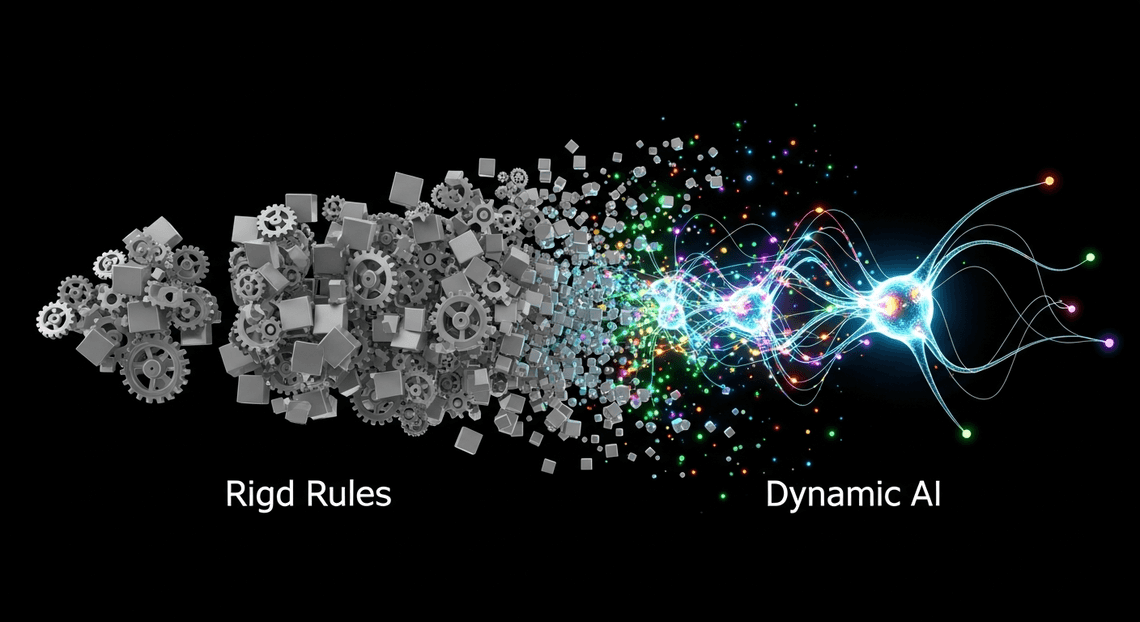
To achieve true hyper-personalization, organizations must transition from deterministic rules to probabilistic, AI-driven architectures. By leveraging a unified AI platform like Google Cloud’s Building Self Correcting Agentic Workflows with Vertex AI, engineering teams can build intelligent agents that continuously learn from vast enterprise datasets residing in BigQuery.
Instead of relying on hardcoded thresholds, AI-driven offer engines utilize deep learning models, collaborative filtering, and generative AI to dynamically score and assemble promotions in real-time. This modern approach allows the system to evaluate thousands of features simultaneously—such as time of day, current inventory levels, past purchase cadence, price elasticity, and real-time browsing context. The result is an autonomous system capable of generating an offer that is uniquely tailored to an individual user’s exact micro-moment, adapting instantly as consumer behaviors and market conditions evolve.
The Strategic Value of the Next Best Offer
At the core of this AI-driven transformation is the concept of the Next Best Offer (NBO). An NBO architecture fundamentally shifts the promotional paradigm from a product-centric push (“How do we clear out inventory of Product X?”) to a customer-centric pull (“What is the most valuable, contextually relevant interaction we can provide to Customer Y right now?”).
The strategic value of successfully implementing an NBO agent extends far beyond a simple bump in short-term conversion rates. By consistently presenting the right offer, through the optimal channel, at the exact right time, retailers unlock several critical business advantages:
-
Maximizing Customer Lifetime Value (CLTV): Highly relevant offers drive repeat purchases and increase average order value (AOV) without training customers to simply wait for the next massive sitewide sale.
-
Margin Optimization: NBO systems minimize promotional waste. By predicting a customer’s propensity to buy, the agent ensures that margin-eroding discounts are only offered when absolutely necessary to close a sale, while offering non-monetary perks (like expedited shipping or exclusive access) to customers who are already highly likely to convert.
-
Proactive Churn Reduction: By anticipating a customer’s needs before they even articulate them, an intelligent NBO system fosters a deep sense of brand affinity. It transforms the shopping experience from a transactional exchange into a personalized service.
From a cloud engineering perspective, building this NBO capability on a scalable AI stack ensures that the business can iterate rapidly. It transforms raw data into a continuous feedback loop, turning predictive insights into a sustainable, compounding competitive advantage.
Architectural Overview of the Offer Agent
Designing an intelligent agent that can autonomously generate and deliver hyper-personalized offers requires more than just a simple API call to a Large Language Model (LLM). It demands a robust, event-driven architecture capable of securely handling enterprise data, executing complex reasoning, and integrating seamlessly with delivery mechanisms. By leveraging the Google Cloud ecosystem, we can build a highly scalable, serverless pipeline that bridges the gap between raw transactional data and a compelling customer experience.
Defining the Core Tech Stack
To ensure our Offer Agent is highly available, secure, and performant, we will rely on a curated stack of Google Cloud and Automatically create new folders in Google Drive, generate templates in new folders, fill out text automatically in new files, and save info in Google Sheets services. Each component plays a distinct role in the orchestration, reasoning, and delivery phases of the agent’s lifecycle:
-
Vertex AI (The Brain): At the core of our agent is Vertex AI, specifically utilizing the Gemini foundation models. Vertex AI handles the complex reasoning, natural language understanding, and generative tasks required to craft personalized offer copy based on structured customer data.
-
BigQuery (The Memory): Serving as our enterprise data warehouse, BigQuery stores the comprehensive 360-degree customer view. This includes historical transaction logs, browsing behavior, loyalty program tiers, and product inventory catalogs. It provides the essential context the LLM needs to make relevant decisions.
-
Cloud Pub/Sub (The Nervous System): To make the agent responsive to real-time events, Pub/Sub acts as our asynchronous messaging backbone. It decouples our systems, ensuring that spikes in transaction volumes do not overwhelm the generation pipeline.
-
Cloud Run (The Orchestrator): We use Cloud Run to host our stateless, containerized agent logic. This serverless compute layer acts as the middleware—listening for events, querying BigQuery, constructing prompts, calling Vertex AI, and formatting the final output.
-
AC2F Streamline Your Google Drive Workflow APIs (The Delivery Layer): To handle the “last mile” of the customer journey, we integrate with Automated Client Onboarding with Google Forms and Google Drive.. Specifically, the Gmail API is used to programmatically dispatch the personalized offers directly to the customer’s inbox, while the Google Docs API can be optionally utilized to generate dynamically formatted PDF vouchers.
Mapping the Data Flow from Transaction to Inbox
Understanding the architecture requires tracing the lifecycle of a single event as it propagates through our tech stack. Here is the step-by-step data flow, illustrating how a raw transaction is transformed into a personalized inbox experience:
-
Event Ingestion and Trigger: The flow begins when a customer completes an action—such as making a purchase, abandoning a cart, or reaching a new loyalty tier. The e-commerce backend publishes an event payload (containing the
customer_idandevent_type) to a designated Cloud Pub/Sub topic. -
Context Retrieval (Data Enrichment): The Pub/Sub message triggers our agent service hosted on Cloud Run. The agent immediately takes the
customer_idand executes a parameterized query against BigQuery. This retrieves a rich context payload: the customer’s first name, past purchase categories, lifetime value, and a list of currently overstocked inventory items that align with their buying habits. -
Prompt Engineering for Reliable Autonomous Workspace Agents and Inference: Armed with this enriched data, the Cloud Run service dynamically constructs a strict, system-instructed prompt. This prompt, along with the customer context, is sent to Vertex AI. The Gemini model processes the prompt, reasoning through the customer’s preferences to select the optimal product offer and generating highly personalized, persuasive email copy.
-
Formatting and Last-Mile Delivery: Vertex AI returns the generated subject line and email body to Cloud Run. The agent validates the output against predefined safety and formatting guardrails. Once validated, the agent constructs a MIME email message and authenticates with the Gmail API via a service account with domain-wide delegation (or standard OAuth depending on the deployment model). The API dispatches the email, successfully landing the personalized offer in the customer’s inbox just moments after their initial transaction.
Syncing Transactional Data with Google Sheets
When architecting a personalized offer agent, the intelligence of your Vertex AI model is directly proportional to the quality and accessibility of your customer data. While enterprise environments often rely on BigQuery or Cloud SQL for massive datasets, Google Sheets remains an incredibly agile, accessible, and powerful tool for managing transactional data—especially for prototyping, lightweight applications, or business-user-managed datasets. By bridging Automated Discount Code Management System and Google Cloud, we can create a seamless pipeline where real-time purchase data feeds directly into our AI agent’s context window.
Structuring Customer Purchase History for AI Ingestion
For a Vertex AI agent to generate highly targeted and personalized offers, it needs to understand a customer’s buying behavior at a glance. Large Language Models (LLMs) excel at pattern recognition, but feeding them raw, unstructured, or highly normalized relational data can lead to hallucinations or increased token consumption.
To optimize data for AI ingestion, the purchase history within Google Sheets must be structured as a clean, denormalized, and flat table. Here are the core principles for structuring this data:
-
Semantic Column Headers: Use clear, descriptive headers (e.g.,
Customer_ID,Last_Purchase_Date,Product_Category,Lifetime_Value,Preferred_Brand). The Vertex AI agent will use these headers as context clues to understand the schema. -
Chronological Sorting: Order the rows by timestamp. When the agent retrieves a customer’s history, seeing the most recent transactions first allows it to weigh current interests heavier than past behaviors.
-
Categorical Enrichment: Instead of just listing a raw
SKU, include descriptive columns likeItem_DescriptionandCategory_Tags(e.g., Apparel > Winter > Men’s Jackets). Rich text descriptions give the LLM the semantic context it needs to generate relevant cross-sell or up-sell offers. -
Aggregated Metrics: Alongside individual transactions, maintain a “Customer Summary” sheet. Pre-calculating metrics like
Average_Order_ValueorDays_Since_Last_Purchasesaves the LLM from doing complex math on the fly, allowing it to focus purely on offer generation and natural language reasoning.
By maintaining strict data hygiene—eliminating blank rows, standardizing date formats (ISO 8601 is recommended), and ensuring consistent currency formatting—you drastically reduce the preprocessing overhead required before the data hits the Vertex AI endpoint.
Automating Data Retrieval Using SheetsApp
Structuring the data is only half the battle; the next step is building the pipeline that feeds this data to Vertex AI. In the Automated Email Journey with Google Sheets and Google Analytics ecosystem, the SpreadsheetApp class (often referred to within Apps Script workflows as the Sheets app service) is the native engine for automating data retrieval and manipulation.
To connect our Google Sheet to the Vertex AI agent, we can utilize AI Powered Cover Letter Automation Engine to expose our structured purchase history as a secure, lightweight REST API, or use it to push updates directly to a Google Cloud Pub/Sub topic.
Here is how you can automate the retrieval process using SpreadsheetApp:
-
Creating a Data Fetcher Function: Using Apps Script, you can write a function that targets specific customer records based on an incoming query from your Vertex AI agent’s orchestration layer (e.g., LangChain or Vertex AI Extensions).
-
Parsing to JSON: The agent expects data in a machine-readable format.
SpreadsheetAppcan grab the data range, map the rows to the semantic headers we defined earlier, and convert the output into a clean JSON payload. -
Exposing via Web App: By deploying the Apps Script as a Web App, you create an endpoint. When the Vertex AI agent needs to generate an offer for “Customer 12345”, it makes a secure HTTP GET request to this endpoint.
Here is a conceptual example of how SpreadsheetApp handles this retrieval:
function doGet(e) {

// Extract the requested Customer ID from the Vertex AI agent's API call

const targetCustomerId = e.parameter.customerId;

// Access the active spreadsheet and the specific transactional data sheet

const sheet = SpreadsheetApp.getActiveSpreadsheet().getSheetByName("Purchase_History");

const data = sheet.getDataRange().getValues();

const headers = data[0];

let customerHistory = [];

// Iterate through rows to find matching transactions

for (let i = 1; i < data.length; i++) {

if (data[i][0] == targetCustomerId) {

let transaction = {};

for (let j = 0; j < headers.length; j++) {

transaction[headers[j]] = data[i][j];

}

customerHistory.push(transaction);

}

}

// Return the structured data to the Vertex AI agent as a JSON response

return ContentService.createTextOutput(JSON.stringify({

status: "success",

customerId: targetCustomerId,

transactions: customerHistory

})).setMimeType(ContentService.MimeType.JSON);

}
By leveraging SpreadsheetApp in this manner, you create a dynamic, serverless bridge. The Vertex AI agent can now autonomously query real-time transactional data, ensuring that every personalized offer it generates is backed by the most up-to-date customer behavior stored in your Google Sheets.
Generating Content with Vertex AI
At the heart of our personalized offer agent lies Google Cloud’s Vertex AI. While traditional recommendation engines output a simple product ID and a generic discount code, Vertex AI elevates this by generating highly contextual, human-like marketing copy tailored to the individual. By leveraging the Gemini family of models, we can synthesize complex user profiles, real-time inventory, and brand guidelines into compelling, conversion-optimized offers. This phase of the architecture bridges the gap between raw analytical data and the final customer touchpoint.
Designing Prompt Architecture for Retail Context
In the retail sector, an AI-generated offer must be more than just accurate—it must align perfectly with your brand’s voice, adhere to promotional constraints, and resonate emotionally with the shopper. Achieving this requires a robust and scalable prompt architecture.
Instead of relying on basic zero-shot queries, a production-grade retail agent utilizes a structured, multi-layered prompt template. This architecture typically involves:
-
System Instructions: Defining the precise persona and boundaries of the AI. For example: “You are an expert retail stylist and marketing copywriter for a premium activewear brand. Your tone is encouraging, energetic, and concise. Never offer a discount greater than 20%.”
-
Dynamic Context Injection: Programmatically inserting real-time variables into the prompt payload. This includes the customer’s loyalty tier, current seasonal campaigns, and live inventory levels fetched via API to prevent the agent from promoting out-of-stock items.
-
Few-Shot Examples: Providing the model with examples of high-performing past campaigns. This grounds the LLM in the specific formatting, constraints, and length required for different distribution channels (e.g., a 160-character SMS vs. a rich HTML Email vs. a mobile Push Notification).
Using Vertex AI Studio, cloud engineers can iteratively test, evaluate, and version these prompts. Tuning generation parameters is critical here; for instance, keeping the Temperature relatively low (around 0.2 to 0.4) ensures the generated copy maintains brand consistency and commercial safety, while still allowing for slight creative variation in the messaging.
Processing History to Predict the Next Best Offer
To generate an offer that truly feels bespoke, the agent must understand the customer’s unique journey. This is where we transition from generic marketing to predicting the Next Best Offer (NBO) by deeply processing historical data.
In a typical Google Cloud architecture, customer telemetry—such as past purchases, browsing behavior, search queries, and abandoned carts—resides in BigQuery. By integrating BigQuery with Vertex AI (often utilizing Vertex AI Feature Store or direct BigQuery ML integrations), we can feed this rich, structured history directly into the model’s expansive context window.
When a trigger event occurs (such as a user opening the mobile app or abandoning a cart), the system retrieves the user’s recent event timeline. The prompt architecture is then dynamically assembled to ask the Gemini model to analyze this specific sequence. For instance, if the BigQuery history shows a customer recently purchased trail running shoes and has spent the last two days browsing hydration packs, the LLM identifies the logical cross-sell.
However, the true power of Vertex AI is that the model doesn’t just predict the product; it synthesizes the history to explain why the offer makes sense to the user. The prompt instructs the model to connect the dots in the generated copy: “Since you’ve been hitting the trails in your new TrailMax 500s, stay hydrated on your next long run with 20% off our premium hydration vests.” By processing historical sequences, Vertex AI transforms static data points into a cohesive, highly targeted narrative that significantly drives up conversion rates.
Automating Delivery via GmailApp
With Vertex AI successfully synthesizing a hyper-personalized, context-aware offer, the final mile of our architecture involves delivering that payload directly to the customer. For organizations already operating within the Google ecosystem, leveraging Automated Google Slides Generation with Text Replacement’s GmailApp service—typically executed via Genesis Engine AI Powered Content to Video Production Pipeline or orchestrated through the Gmail API—provides a seamless, zero-infrastructure delivery mechanism.
By tightly coupling Google Cloud’s AI capabilities with Workspace’s communication tools, we can create an end-to-end automated pipeline that requires no third-party email service providers. However, transitioning from an AI prompt to a polished email requires careful handling of the payload and a strategic approach to scale.
Constructing Dynamic and Personalized Email Payloads
The raw output from an LLM, even when perfectly tailored, is rarely ready to be sent “as-is.” To drive conversions, the AI-generated offer must be wrapped in a visually appealing, brand-aligned, and responsive format. We achieve this by combining the deterministic nature of HTML templating with the non-deterministic brilliance of Vertex AI.
When configuring your Vertex AI generation parameters, it is a best practice to enforce a structured JSON output (using responseMimeType: "application/json"). This allows your delivery function to easily parse the AI’s response into distinct components, such as the subject line, the personalized greeting, the core offer narrative, and the dynamic promo code.
Using Architecting Multi Tenant AI Workflows in Google Apps Script’s HtmlService, you can bind these JSON data points to a pre-designed HTML template:
function dispatchPersonalizedOffer(customerEmail, customerName, aiResponseJson) {

// Parse the structured output from Vertex AI

const offerData = JSON.parse(aiResponseJson);

// Load the responsive HTML template

const htmlTemplate = HtmlService.createTemplateFromFile('OfferTemplate');

// Inject dynamic, AI-generated variables

htmlTemplate.customerName = customerName;

htmlTemplate.heroMessage = offerData.personalizedNarrative;

htmlTemplate.promoCode = offerData.uniqueDiscountCode;

htmlTemplate.ctaLink = offerData.tailoredProductUrl;

// Evaluate the template into a raw HTML string

const emailHtmlBody = htmlTemplate.evaluate().getContent();

// Dispatch the email via GmailApp

GmailApp.sendEmail(customerEmail, offerData.optimizedSubjectLine, "", {

htmlBody: emailHtmlBody,

name: "Acme Corp Exclusive Offers",

replyTo: "[email protected]"

});

}
This separation of concerns ensures that your marketing team can update the CSS and HTML layout independently of the Cloud Engineering team managing the Vertex AI prompts. The result is a pixel-perfect email where the content is dynamically authored by AI, but the presentation remains strictly governed by your brand guidelines.
Ensuring High Deliverability at Scale
While GmailApp is incredibly convenient for rapid deployment and internal tooling, relying on it for customer-facing agents at scale requires a robust architectural strategy. Automated Order Processing Wordpress to Gmail to Google Sheets to Jobber imposes strict daily sending limits (typically 2,000 emails per user, per day for paid accounts), and rapid, bursty API calls can trigger rate limits.
To ensure high deliverability and system resilience, you must implement the following architectural safeguards:
1. Asynchronous Queueing and Throttling
Never trigger GmailApp directly from a synchronous user event if you are operating at scale. Instead, push the Vertex AI output to a Google Cloud Pub/Sub topic or a Cloud Tasks queue. Cloud Tasks is particularly effective here, as it allows you to configure precise dispatch rates (e.g., 1 email per second) and implement exponential backoff for retries, ensuring you never overwhelm the Apps Script execution quotas or Gmail API limits.
2. Domain Reputation and Authentication
Because these emails are automated, ISPs will scrutinize them heavily. Ensure your Automated Payment Transaction Ledger with Google Sheets and PayPal domain is strictly authenticated. Your DNS records must have perfectly aligned SPF (Sender Policy Framework), DKIM (DomainKeys Identified Mail), and DMARC (Domain-based Message Authentication, Reporting, and Conformance) policies. Without these, your beautifully personalized AI offers will land directly in the spam folder.
3. AI Content Safety and Spam Filters
Even with the best prompts, LLMs can occasionally generate phrases that trigger aggressive spam filters (e.g., overusing words like “FREE,” “URGENT,” or excessive exclamation marks). Utilize Vertex AI’s built-in safety settings to block harmful content, and consider running a lightweight regex-based sanitization step on the optimizedSubjectLine before passing it to GmailApp.
4. Mandatory List Hygiene
High engagement rates—driven by the personalization of Vertex AI—will naturally boost your sender reputation. However, you must still provide a clear, one-click unsubscribe link in your HTML payload. Managing opt-outs systematically (often by writing the unsubscribe event back to BigQuery or Cloud SQL) prevents users from marking your automated agent as spam, thereby protecting your domain’s deliverability at scale.
Scaling Your Retail AI Architecture
Building a personalized offer agent is only half the battle; serving those hyper-targeted offers to millions of concurrent users during a Black Friday flash sale is where true cloud engineering comes into play. Transitioning your Vertex AI solution from a successful Proof of Concept (PoC) to an enterprise-grade, globally distributed system requires a robust, event-driven architecture.
To achieve seamless scalability, we decouple the architecture using Google Cloud’s managed services. Real-time clickstream data and cart updates are ingested via Cloud Pub/Sub, acting as the central nervous system for your retail data. This data is then processed in real-time by Dataflow, which extracts features and passes them to Vertex AI Endpoints. Because Vertex AI Endpoints support auto-scaling out of the box, your infrastructure dynamically provisions compute resources—such as NVIDIA GPUs or specialized TPUs—to handle traffic spikes, ensuring low-latency inference even under immense load.
Furthermore, scaling isn’t just about handling traffic; it’s about scaling the intelligence of the system. Implementing a mature MLOps framework using Vertex AI Pipelines ensures continuous training. As consumer trends shift, the pipeline automatically triggers model retraining using fresh data stored in BigQuery, deploying updated champion models without manual engineering intervention.
Measuring the Impact of Automated Personalization
An AI architecture is ultimately judged by the business value it generates. Once your personalized offer agent is deployed, establishing a rigorous, automated feedback loop is critical to quantify its success and optimize its decision-making capabilities.
In the Google Cloud ecosystem, BigQuery serves as the analytical engine for this feedback loop. By routing both the generated offers and the resulting user actions (clicks, ignores, redemptions) back into BigQuery, you can track the model’s efficacy in real-time. To truly measure the impact, your data engineering teams should focus on tracking the following Key Performance Indicators (KPIs):
-
Offer Redemption Rate: The percentage of AI-generated offers that are actually claimed at checkout, indicating the relevance of the personalization.
-
Incremental Lift in Average Order Value (AOV): Measuring whether the personalized bundles or cross-sell offers are actively driving customers to spend more per transaction.
-
Time-to-Conversion: Tracking if highly targeted offers reduce the friction and time between a user adding an item to their cart and completing the purchase.
-
Model Drift Metrics: Monitoring the statistical properties of the model’s predictions over time to ensure accuracy doesn’t degrade as market conditions change.
To visualize these metrics, Looker can be integrated directly with BigQuery to create real-time, interactive dashboards. Additionally, utilizing Vertex AI’s built-in traffic splitting allows you to run continuous A/B tests (Champion/Challenger deployments). This enables you to safely route a percentage of live traffic to experimental offer models, mathematically proving the ROI of your automated personalization strategy before a full rollout.
Book a Discovery Call to Audit Your Business Needs
Every retail ecosystem is unique, with its own specific legacy systems, data silos, and customer engagement strategies. While the blueprint for a Vertex AI personalized offer agent provides a powerful foundation, the key to a successful deployment lies in tailoring the architecture to your exact operational reality.
Whether you are looking to modernize an existing rules-based recommendation engine or build a generative AI offer agent from the ground up, our team of Cloud Engineers can help you navigate the complexities of Google Cloud.
Book a discovery call with us today to conduct a comprehensive audit of your business needs. During this session, we will:
-
Assess your Data Maturity: Evaluate your current data pipelines, storage solutions, and readiness for advanced machine learning models.
-
Identify Integration Points: Map out how Vertex AI can seamlessly integrate with your existing e-commerce platform, CRM, and Google Docs to Web collaboration tools.
-
Architect a Custom Roadmap: Outline a phased approach from initial PoC to a fully scaled, MLOps-driven production environment, complete with projected ROI and infrastructure cost analysis.
Stop leaving revenue on the table with generic discounts. Let’s architect an intelligent, scalable personalization engine that drives real growth.


Stop Doing Manual Work. Scale with AI.
Want to turn these blog concepts into production-ready reality for your team?
Table Of Contents
Portfolios
Related Posts
Quick Links
Legal Stuff