

Reduce Patient No Shows Using Gemini AI Appointment Reminders


Patient no-shows cost the healthcare industry billions annually, triggering a devastating domino effect of wasted resources and compromised patient care. Discover the true operational toll of missed appointments and why plugging this massive leak is critical for modern healthcare systems.
The Hidden Cost of Missed Healthcare Appointments
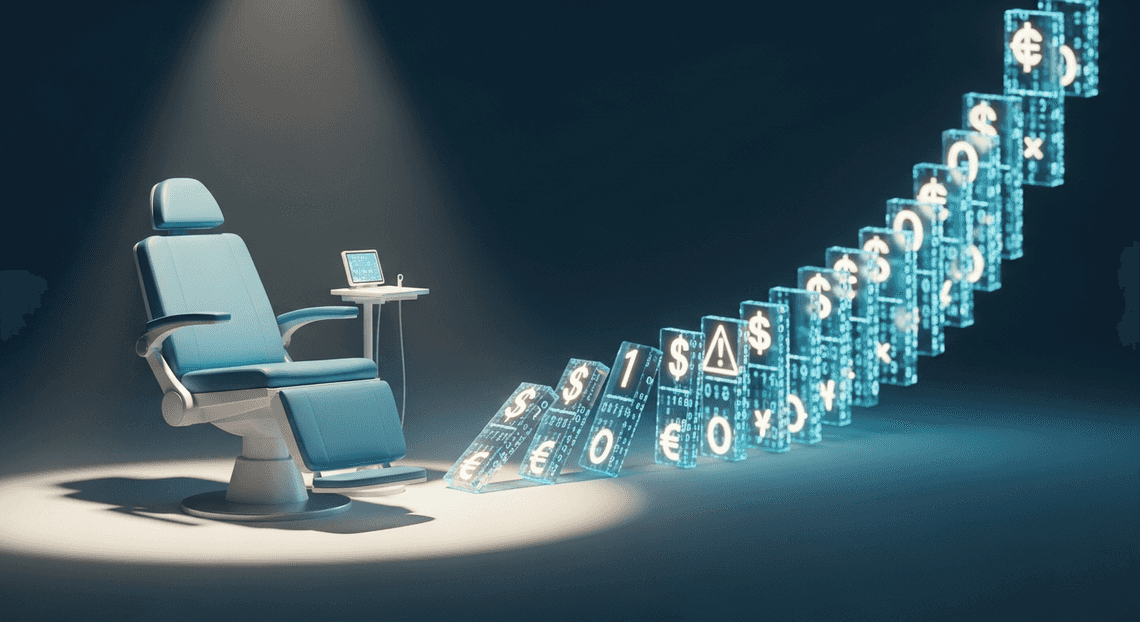
Patient no-shows are more than just a minor scheduling hiccup; they represent a massive, compounding leak in the healthcare ecosystem. Industry estimates suggest that missed appointments cost the U.S. healthcare system billions of dollars annually. But the true cost extends far beyond immediate lost revenue.
When a patient fails to show up, it triggers an operational domino effect. Providers are left with unutilized time, expensive diagnostic equipment sits idle, and administrative staff are burdened with the manual overhead of tracking down the patient and navigating the friction of rescheduling. Furthermore, from a clinical perspective, delayed care often leads to worsening patient outcomes, which ultimately drives up the long-term cost of treatment. In an era where healthcare organizations are striving for operational efficiency—often migrating to scalable cloud infrastructures to optimize resource allocation—the unpredictability of patient attendance remains a stubborn bottleneck.
Why Traditional Generic Reminders Fail
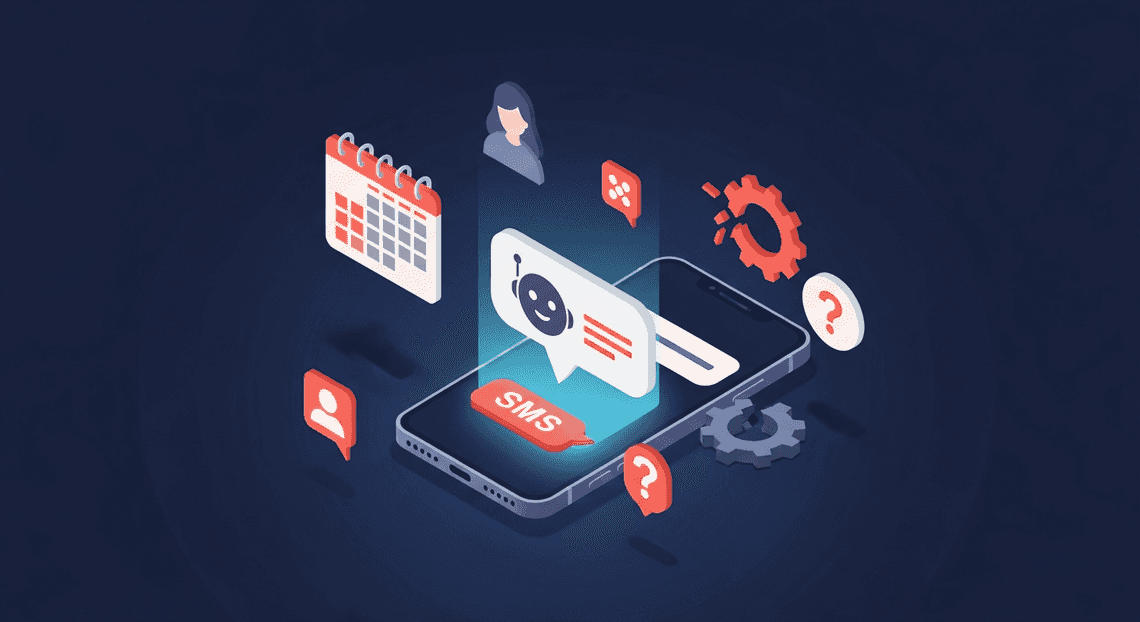
For years, clinics have attempted to patch this leak using automated reminder systems. However, legacy infrastructure relies heavily on static, rule-based logic. We are all familiar with the standard, robotic SMS blast: “You have an appointment tomorrow at 9:00 AM. Reply Y to confirm or N to cancel.”
These traditional, generic reminders fail for several critical reasons:
-
Lack of Contextual Awareness: Static systems cannot process nuance. If a patient replies, “I can’t make it tomorrow because my car broke down, but I can come in on Thursday,” a legacy system simply registers an error or defaults to a cancellation, requiring human intervention.
-
Alert Fatigue: Patients are bombarded with automated notifications daily. A generic, impersonal text message is easily ignored, swiped away, or even flagged as spam by modern mobile carriers.
-
One-Way Communication: Traditional reminders are transactional broadcasts, not conversations. They do not offer the patient a frictionless way to ask questions about prep instructions, parking, or insurance—factors that often cause anxiety and lead to a no-show.
Relying on rigid, deterministic communication workflows in a modern, dynamic healthcare environment is an architectural anti-pattern. It treats patients as data points rather than individuals with complex, shifting schedules.
The Value of Relationship Focused Patient Engagement
To meaningfully reduce no-show rates, healthcare providers must shift from transactional notifications to relationship-focused patient engagement. Patients today expect the same seamless, personalized, and empathetic digital experiences they receive from top-tier consumer applications.
Relationship-focused engagement means communicating with patients intelligently and empathetically. It involves understanding their preferred communication channels, recognizing their specific appointment context, and providing dynamic, conversational support. When a reminder feels less like a database trigger and more like a helpful assistant checking in, patient trust and accountability increase dramatically.
Achieving this at scale used to be impossible without hiring massive call center teams. However, modern cloud engineering and advanced AI have changed the paradigm. By leveraging intelligent, natural language processing capabilities—integrated directly into the tools administrative teams already use, like Automatically create new folders in Google Drive, generate templates in new folders, fill out text automatically in new files, and save info in Google Sheets—clinics can automate outreach while maintaining a highly personalized, conversational touch. This proactive, relationship-driven approach not only salvages at-risk appointments but fundamentally elevates the overall patient experience.
Transforming Operations with Agentic AI Workflows
For decades, healthcare providers have relied on static, rule-based systems to manage patient scheduling. These legacy systems typically trigger a generic SMS or email blast 24 hours before a visit. While better than nothing, they are fundamentally passive. If a patient replies with a complex question or a scheduling conflict, the system breaks down, ultimately requiring manual intervention from already overburdened administrative staff.
By leveraging the Google Cloud ecosystem—specifically Building Self Correcting Agentic Workflows with Vertex AI and AC2F Streamline Your Google Drive Workflow APIs—we can transition from passive notifications to agentic AI workflows. In an agentic architecture, the AI doesn’t just generate text; it is empowered with tools, context, and autonomy to execute multi-step processes, make logical decisions, and interact dynamically with both patients and backend systems. This paradigm shift is redefining how clinics operate, drastically reducing the friction that leads to patient no-shows.
What is an Agentic Appointment Reminder
An agentic appointment reminder is an intelligent, autonomous workflow driven by Large Language Models (LLMs) like Gemini, designed to handle the end-to-end lifecycle of a patient interaction. Unlike a traditional cron-job that blindly fires off a “Reply Y to confirm” text message, an agentic system acts as a virtual care coordinator.
When an appointment approaches, the AI agent orchestrates a sequence of intelligent actions:
-
Context Gathering: The agent securely queries the Cloud Healthcare API to retrieve the appointment type and checks Google Calendar (via Workspace APIs) for the provider’s real-time availability.
-
Dynamic Outreach: It initiates a conversational thread with the patient.
-
Intent Recognition and Action: If a patient responds, “I can’t make it tomorrow morning, my car broke down,” a traditional system would fail. An agentic workflow powered by Gemini understands the semantic intent (cancellation due to transportation issues). It can then autonomously query the Google Calendar API for available afternoon slots or alternative dates, propose them to the patient in natural language, and securely update the scheduling backend once the patient agrees.
By integrating Gemini’s advanced reasoning capabilities with Cloud Functions and Eventarc, these agents can handle edge cases, answer logistical questions (e.g., “Where do I park?”), and seamlessly route only the most complex, sensitive issues to a human staff member.
How Gemini AI Personalizes Pre Op Instructions
One of the leading causes of day-of-procedure cancellations—a particularly costly form of a no-show—is patient non-compliance with pre-operative instructions. Often, patients are handed a dense, generic packet of medical jargon that fails to account for their specific circumstances. Gemini AI solves this by transforming static documents into highly personalized, easily digestible care plans.
Using a Retrieval-Augmented Generation (RAG) architecture on Vertex AI, Gemini can securely ingest a patient’s specific medical profile alongside the clinic’s standard procedural guidelines. The AI synthesizes this data to generate bespoke instructions tailored to the individual.
For example, instead of a generic “Fast for 12 hours and manage your medications,” Gemini can generate a precise, time-bound checklist:
-
“Because your procedure is at 8:00 AM on Thursday, please stop eating solid foods by 8:00 PM on Wednesday.”
-
“We see in your chart that you take [Specific Blood Thinner]. Based on Dr. Smith’s guidelines, please skip your dose on Tuesday and Wednesday.”
-
“Since you are diabetic, here are your specific instructions for managing your morning blood sugar.”
Furthermore, Gemini’s native multimodal and multilingual capabilities mean these instructions can be automatically translated into the patient’s preferred language or even converted into an audio briefing using Google Cloud Text-to-Speech. By delivering hyper-personalized, context-aware instructions directly to the patient’s Gmail or mobile device, Gemini AI eliminates the confusion and anxiety that often lead to last-minute cancellations, ensuring patients arrive prepared and on time.
The Automated Client Onboarding with Google Forms and Google Drive. Tech Stack Explained
Building an intelligent appointment reminder system doesn’t require a complex, multi-tiered microservices architecture. By bridging the everyday utility of Automated Discount Code Management System with the advanced generative capabilities of Google Cloud’s AI, we can build a highly effective, serverless solution. This stack relies on AI Powered Cover Letter Automation Engine as the connective tissue, orchestrating data flow between your spreadsheet data, the Gemini API, and your email client. Let’s break down the specific components that make this architecture tick.
Managing Appointment Statuses in Google Sheets
In this architecture, Google Sheets acts as our lightweight, serverless database and frontend user interface. For healthcare administrative staff, Sheets provides a familiar, zero-training-required environment to manage patient schedules and view real-time updates.
From a cloud engineering perspective, we utilize the SpreadsheetApp class within Genesis Engine AI Powered Content to Video Production Pipeline to programmatically interact with the data. The sheet is structured with essential data points: patient name, contact info, appointment date and time, appointment reason (e.g., annual physical, blood work), and crucially, a “Status” column.
The Apps Script is designed to query this status column to determine exactly which patients require a reminder. Once a reminder is generated and dispatched, the script writes back to the sheet, updating the status to “Reminder Sent” along with a precise timestamp. This bidirectional data flow ensures state management is handled elegantly without the need for an external SQL database, keeping the overall architecture lean, cost-effective, and easily maintainable.
Leveraging Gemini Pro for Contextual Messaging
Standard, templated email reminders often get ignored because they feel robotic and lack personalization. This is where Google’s Gemini Pro model transforms the system from a simple automated cron job into an intelligent, patient-centric communication tool.
Using UrlFetchApp in Apps Script, we make secure REST API calls to the Gemini endpoint (via Google AI Studio or Vertex AI). Instead of passing a static string, we construct a dynamic prompt containing the patient’s specific context extracted from Google Sheets. For example, if the appointment type is “fasting blood test,” the prompt instructs Gemini to include a gentle, empathetic reminder not to eat or drink anything but water for 12 hours prior. If it’s a “new patient consultation,” the AI can be prompted to remind them to bring their ID and insurance cards.
Gemini Pro excels at this type of natural language generation. It processes the contextual variables and outputs a warm, professional, and highly customized message. By adjusting the system instructions in the API payload, you can perfectly tailor the tone—ensuring the AI sounds like a helpful, empathetic medical receptionist.
Automating Delivery with GmailApp
The final piece of the puzzle is delivering the AI-generated message to the patient. While you could integrate a third-party email service provider, Automated Email Journey with Google Sheets and Google Analytics natively provides everything you need through the GmailApp service in Apps Script.
Once Gemini Pro returns the customized reminder text, the script invokes GmailApp.sendEmail(). Because the script runs within the clinic’s Automated Google Slides Generation with Text Replacement environment, the emails are sent directly from the authorized user’s or shared clinic’s Gmail account. This eliminates the need to configure complex SMTP relays, manage API keys for external mailers, or worry about complex domain authentication setups, as Workspace handles deliverability and security natively.
Furthermore, this deep integration paves the way for advanced features down the line. Because you are using GmailApp, you can easily extend the script to thread replies or read patient responses (such as a patient replying “Confirm” or “Cancel”) directly from the inbox. This allows you to automatically update the Google Sheet based on their reply, creating a fully closed-loop, automated scheduling workflow.
Building Your Automated Reminder System
To bring this intelligent workflow to life, we are going to use Architecting Multi Tenant AI Workflows in Google Apps Script as our orchestration layer. Because Apps Script lives natively inside Automated Order Processing Wordpress to Gmail to Google Sheets to Jobber, it provides seamless, zero-authentication access to Google Sheets and Gmail, while easily handling REST API calls to Google Cloud’s Gemini models.
The architecture is straightforward but highly effective: a Google Sheet acts as your patient database, Gemini serves as the communication brain, and Gmail acts as the delivery mechanism. Let’s break down the build into three actionable steps.
Step One Reading Data from Google Sheets
The foundation of our automated system is the daily appointment roster. Imagine a Google Sheet where your administrative staff or scheduling software drops upcoming appointments. For this build, assume your sheet has the following columns: Patient Name, Email, Appointment Date, Time, and Appointment Context (e.g., “Annual physical,” “Follow-up on lab results,” or “First-time consultation”).
Using Google Apps Script, we can easily read this data to identify who needs a reminder today.
function processDailyReminders() {

// Access the active spreadsheet and the specific data sheet

const sheet = SpreadsheetApp.getActiveSpreadsheet().getSheetByName("Appointments");

const data = sheet.getDataRange().getValues();

// Extract headers and iterate through the patient rows (skipping row 0)

for (let i = 1; i < data.length; i++) {

const [patientName, email, date, time, context, status] = data[i];

// Only process rows that haven't been sent yet

if (status !== "Sent") {

// Proceed to generate and send the reminder

generateAndSendReminder(patientName, email, date, time, context, i + 1, sheet);

}

}

}
This snippet grabs the entire data range in one API call—a best practice for Apps Script performance—and loops through the rows. By checking a “Status” column, we ensure we never accidentally spam a patient with duplicate reminders.
Step Two Prompting Gemini for Patient Specific Emails
This is where the magic happens. Instead of sending a rigid, robotic template ("Dear [Name], you have an appointment at [Time]"), we will pass the patient’s context to Gemini. Gemini can adjust the tone—being warm and welcoming for a new patient, or reassuring for someone coming in to discuss lab results.
We will construct a dynamic prompt and send it to the Gemini API using Apps Script’s UrlFetchApp service.
function generateAndSendReminder(patientName, email, date, time, context, rowIndex, sheet) {

const apiKey = 'YOUR_GEMINI_API_KEY'; // Secure this using Apps Script Properties Service

const endpoint = `https://generativelanguage.googleapis.com/v1beta/models/gemini-1.5-flash:generateContent?key=${apiKey}`;

// Crafting the context-aware prompt

const prompt = `

You are a professional, empathetic medical receptionist.

Write a brief appointment reminder email for a patient named ${patientName}.

Their appointment is on ${date} at ${time}.

The context of the visit is: ${context}.

Keep the tone reassuring, polite, and strictly professional.

Do not include any placeholder text. Output only the email body.

`;

const payload = {

"contents": [{

"parts": [{"text": prompt}]

}],

"generationConfig": {

"temperature": 0.3 // Low temperature for consistent, professional output

}

};

const options = {

"method": "post",

"contentType": "application/json",

"payload": JSON.stringify(payload)

};

try {

const response = UrlFetchApp.fetch(endpoint, options);

const json = JSON.parse(response.getContentText());

const generatedEmailBody = json.candidates[0].content.parts[0].text;

// Move to Step Three

dispatchReminder(email, patientName, generatedEmailBody, rowIndex, sheet);

} catch (error) {

Logger.log(`Failed to generate email for ${patientName}: ${error}`);

}

}
Notice the temperature setting in the payload. By keeping it low (0.3), we instruct Gemini to remain focused and deterministic, ensuring the medical reminders stay professional and don’t hallucinate unnecessary information.
Step Three Dispatching the Custom Reminder
With a highly personalized, context-aware email generated by Gemini, the final step is to deliver it to the patient and update our database. Because we are inside the Automated Payment Transaction Ledger with Google Sheets and PayPal ecosystem, sending the email requires just a single line of code using the GmailApp service.
function dispatchReminder(email, patientName, emailBody, rowIndex, sheet) {

const subject = `Appointment Reminder: We look forward to seeing you, ${patientName}`;

try {

// Send the email via the authorized user's Gmail account

GmailApp.sendEmail(email, subject, emailBody, {

name: "Your Clinic Name"

});

// Update the Google Sheet to mark the reminder as sent

sheet.getRange(rowIndex, 6).setValue("Sent");

Logger.log(`Successfully sent reminder to ${patientName}`);

} catch (error) {

Logger.log(`Error sending email to ${email}: ${error}`);

sheet.getRange(rowIndex, 6).setValue("Failed");

}

}
Once this function executes, the patient receives a customized email from your clinic’s address, and the Google Sheet is instantly updated with a “Sent” status in the sixth column.
To make this system completely touchless, you can utilize Google Apps Script’s Time-driven triggers. By navigating to the Triggers menu in the Apps Script editor, you can set processDailyReminders to run automatically every morning at 8:00 AM. Your clinic now has an intelligent, automated, and highly personalized no-show reduction engine running entirely in the cloud.
Scale Your Healthcare Architecture Today
Implementing Gemini AI for intelligent appointment reminders is a massive leap forward, but it is only one piece of the puzzle. To truly future-proof your clinic or hospital network, you need an underlying infrastructure capable of handling dynamic patient loads, real-time data processing, and stringent compliance requirements. Scaling your healthcare architecture on Google Cloud means moving beyond legacy, monolithic scheduling software and embracing a modern, serverless ecosystem.
By leveraging tools like Google Cloud Run for auto-scaling your reminder microservices, Vertex AI for managing and fine-tuning your Gemini models, and the Cloud Healthcare API to ensure seamless, secure FHIR data interoperability, you create a resilient foundation. Furthermore, deep integration with Google Docs to Web allows your administrative staff to manage schedules natively within Google Calendar and Gmail, bridging the gap between advanced AI capabilities and everyday operational workflows.
Evaluating Your Current Operational Bottlenecks
Before you can effectively scale, you must first identify the friction points within your existing infrastructure. Operational bottlenecks in healthcare scheduling often hide in plain sight, manifesting as delayed SMS deliveries, out-of-sync calendar events, or siloed patient communication logs that require manual reconciliation by your staff.
To evaluate your current state from a cloud engineering perspective, start by auditing your data pipeline. Are your current automated reminders relying on batch processing that causes latency? Are you experiencing API rate limits with your current SMS or email gateway? Utilize Google Cloud’s operations suite (formerly Stackdriver) to trace the exact latency in your booking and notification flows. By piping your historical appointment data into BigQuery, you can analyze the exact correlation between communication delays and patient no-show rates. Identifying these architectural weak points—whether they are rigid legacy EHR integrations or inefficient webhook handling—is the critical first step in replacing them with a streamlined, event-driven architecture powered by Gemini AI.
Book a GDE Discovery Call with Vo Tu Duc
Transforming your healthcare infrastructure and integrating cutting-edge generative AI requires more than just reading documentation; it requires strategic, battle-tested expertise. If you are ready to eliminate patient no-shows and modernize your tech stack, it is time to consult with an industry leader.
Book a discovery call with Vo Tu Duc, a recognized Google Developer Expert (GDE) in Google Cloud and SocialSheet Streamline Your Social Media Posting. During this tailored session, you will dive deep into your specific operational challenges and explore how to architect a secure, scalable, and compliant solution. Whether you need guidance on structuring your Vertex AI pipelines, integrating Gemini seamlessly into your Speech-to-Text Transcription Tool with Google Workspace environment, or designing a HIPAA-compliant data flow on GCP, Vo Tu Duc can provide the architectural blueprint you need. Stop letting operational bottlenecks dictate your patient care—schedule your GDE discovery call today and take the first step toward a smarter, AI-driven healthcare facility.


Stop Doing Manual Work. Scale with AI.
Want to turn these blog concepts into production-ready reality for your team?
Table Of Contents
Portfolios
Related Posts
Quick Links
Legal Stuff