

Automating Telecom Support AI Triage for Complex Outages


As 5G and IoT make telecom networks impossibly complex, the traditional customer support models we’ve relied on for decades are finally hitting their breaking point.

The Challenge: Escalating Complexity in Telecom Customer Support
The telecommunications landscape is no longer a simple network of calls and data packets. It has evolved into a hyper-complex, multi-layered ecosystem. We’re living in an era of 5G network slicing, distributed cloud infrastructure, edge computing, and a massive Internet of Things (IoT) fabric. Each new service, from high-frequency trading links to autonomous vehicle connectivity, adds another layer of abstraction and another universe of potential failure points. This technological acceleration has delivered unprecedented capabilities, but it has also pushed traditional customer support frameworks to their absolute breaking point. When an outage occurs, it’s rarely a single, obvious fault; it’s a cascade of interconnected events that are nearly impossible for human teams to untangle in real-time.
Why Traditional Support Models Are Breaking
For decades, the telecom industry has relied on a tiered support model: Level 1 (L1) for initial contact and basic troubleshooting, escalating to Level 2 (L2) for more technical issues, and finally to Level 3 (L3) for deep engineering expertise. This linear, hierarchical system was designed for a world of simpler, more predictable problems—a downed cell tower, a cut fiber line, a misconfigured home router.
This model fundamentally breaks down in the face of modern network complexity for several key reasons:
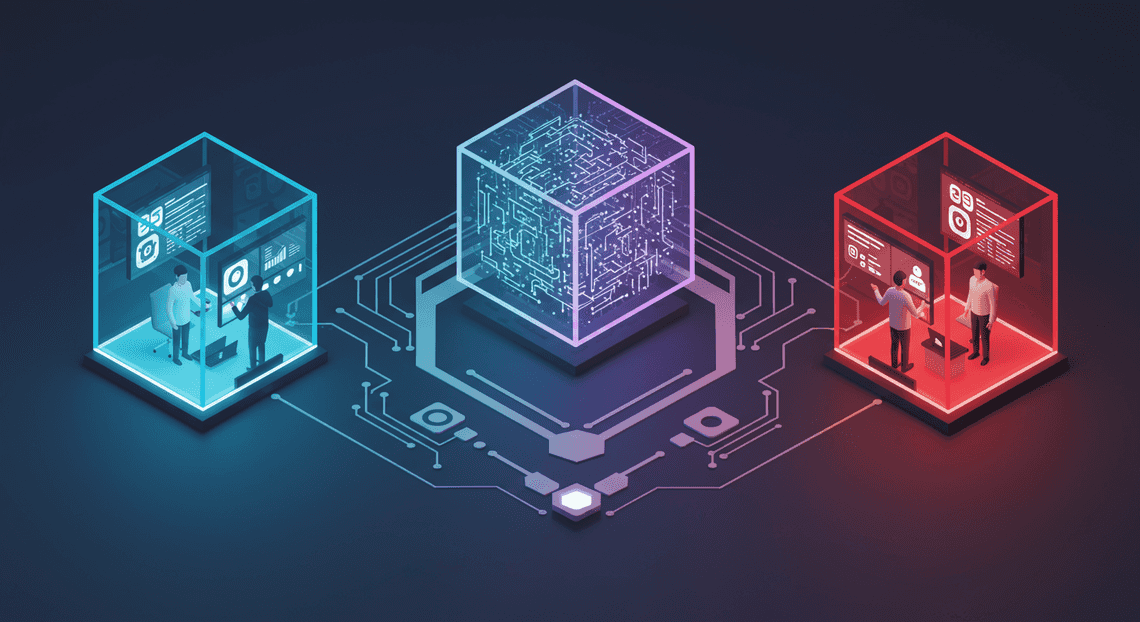
- Siloed Expertise: A single performance issue can now span multiple domains. Is a slow enterprise application the fault of the 5G User Plane Function (UPF), a misconfigured cloud security policy, the local radio access network (RAN), or the application itself? L1 agents lack the visibility to know, and the problem gets bounced between specialized L2/L3 teams—network, cloud, security—each with a limited view of the overall service chain.
-
Data Overload, Insight Scarcity: Modern networks generate terabytes of telemetry data, logs, and alerts every minute. L1 and L2 support teams are flooded with this information but lack the tools to correlate it effectively. A single root cause can manifest as thousands of seemingly unrelated alarms and a flood of customer complaints with varying symptoms, creating a signal-to-noise ratio that is impossible to manage manually.
-
The “Unknown Unknowns”: Traditional models are built on runbooks and known error conditions. But complex, emergent failures in software-defined networks don’t have a pre-written script. The problem isn’t just finding a needle in a haystack; it’s realizing that a thousand different pieces of straw across multiple haystacks are actually part of the same needle.
The result is a support system that is perpetually reactive. Engineers spend more time trying to identify the problem domain than they do solving the actual problem.
The High Cost of Manual Triage and Long Resolution Times
The breakdown of traditional support isn’t just an operational headache; it’s a significant drain on financial resources and customer loyalty. The costs associated with slow, manual triage are staggering and multifaceted.
First are the direct operational costs. Maintaining large L1/L2 teams to handle high call volumes is expensive, especially when their primary function becomes routing tickets rather than resolving them. More critically, every minute that a complex issue remains untriaged is a minute that your most expensive resources—your L3 engineers and subject matter experts (SMEs)—are pulled away from innovation and core engineering to perform detective work. This is a profound misallocation of talent and budget.
Second, and arguably more damaging, are the indirect costs:
-
Inflated Resolution Metrics: Key performance indicators like Mean Time to Identify (MTTI) and Mean Time to Resolution (MTTR) skyrocket. What could be a 15-minute fix takes hours or even days simply because the right team wasn’t engaged with the right information at the outset.
-
SLA Penalties and Churn: For high-value enterprise customers, these delays translate directly into breached Service Level Agreements (SLAs), resulting in financial penalties, credits, and a severe loss of trust. For consumers, a prolonged outage or performance degradation is a primary driver of churn to competitors.
-
Brand Erosion: In an always-on world, widespread outages become headline news. The inability to quickly diagnose and communicate the nature of a problem erodes brand reputation and public confidence, with long-term consequences that are difficult to quantify but impossible to ignore.
Manual triage creates a vicious cycle: long resolution times lead to more customer calls, which overwhelms the support system, further delaying resolution.
Introducing an AI-Driven Path to Efficiency
To break this cycle, a paradigm shift is required—moving from a manual, tiered, and reactive model to an automated, context-aware, and proactive one. This is where AI-driven triage becomes not just a “nice-to-have” but a strategic necessity for survival and growth in the modern telecom market.
An AI-driven approach fundamentally re-architects the incident response process. Instead of relying on humans to manually connect the dots, an AI platform can:
-
Ingest and Correlate Data at Scale: Seamlessly pull in and analyze data from dozens of disparate sources in real-time—network telemetry, customer trouble tickets, CRM data, social media sentiment, infrastructure logs, and more.
-
Identify Incident Clusters: Use machine learning to recognize that thousands of individual customer reports with different symptoms (e.g., “slow video,” “can’t connect,” “dropped calls”) across a geographic area are all related to a single, underlying silent failure in a core network function.
-
Automate Root Cause Hypothesis: Go beyond simple alerting. An AI triage engine can analyze the correlated data to provide a high-confidence hypothesis about the root cause, identifying the specific component, service, or configuration change that likely triggered the event.
-
Enrich and Route Intelligently: Automatically enrich a newly formed “master ticket” with all relevant technical context, logs, and affected user data. It can then bypass L1/L2 entirely and route the incident directly to the correct L3 engineering team, turning a multi-hour manual triage process into a sub-minute automated workflow.
This isn’t about replacing human experts; it’s about augmenting them. By letting AI handle the monumental task of data correlation and pattern recognition, you free your most valuable engineers to do what they do best: solve complex problems and build a more resilient network. This AI-driven path is the key to reducing MTTR, cutting operational costs, and delivering the reliable, high-performance service that customers now demand.
Architecting an Intelligent Triage Solution
Moving from conceptual goals to a functional system requires a robust and scalable architecture. The core principle is to create a decoupled, event-driven system where specialized components handle distinct tasks, from understanding human language to querying vast datasets and communicating back to the user. We’ll blueprint a solution built on Google Cloud Platform, leveraging its powerful AI, database, and communication services to create a seamless triage pipeline. This architecture is designed not just to react to events but to enrich them with context at every step, enabling smarter, faster decisions.
High-Level Workflow From Customer Chat to Resolution
The journey from a customer’s frustrated message to a successful resolution follows a clear, automated path. Each step builds upon the last, transforming a simple text string into an actionable, context-rich incident report.
-
Initiation & Ingestion: A customer or internal technician reports an issue via a dedicated Google Chat space. The message, “My internet is out for device ONT-4815A,” is sent. A Google Cloud Function, triggered by the Google Chat API, ingests this raw message.
-
**Natural Language Understanding (NLU): The Cloud Function immediately passes the message text to a [Building Self Correcting Agentic Workflows with Building Self-Correcting Agentic Workflows with Vertex AI](https://votuduc.com/building-self-correcting-agentic-workflows-with-vertex-ai-p-20260321542526) endpoint. Vertex AI analyzes the text to determine the user’s intent (e.g.,
report_outage) and extracts critical entities such as{device_id: "ONT-4815A"}. -
Contextual Enrichment: Armed with the extracted
device_id, the system queries a Firestore database. It retrieves the full device document, which contains vital context: its precise geographic location, the network segment it belongs to, its last known status, customer account details, and recent event logs. -
Intelligent Triage & Correlation: The system now has a complete picture: the user’s report combined with the device’s operational history and network topology. It performs a correlation check in Firestore:
-
It queries an
outagescollection to see if an active outage already includes the device’s network segment. -
If a match is found, the user’s report is linked to the existing master incident.
-
If no match is found, the system analyzes the device’s individual health metrics to determine if this is an isolated issue.
- Action & Communication: Based on the triage, the system executes a specific action and communicates back to the user via the Google Chat API:
-
Known Outage: It sends a rich card message: “We’ve confirmed your device is part of a wider network outage in your area. Our team is working on it. Estimated resolution: 2 hours. No further action is needed from you.”
-
Isolated Issue: It presents diagnostic options: “I see your device is online but not responding. Would you like me to perform a remote reboot?” with interactive buttons for “Yes, Reboot” or “No, Escalate”.
-
Escalation: If automated steps fail or the user requests it, the system packages all collected data (user report, NLU analysis, Firestore device context, diagnostic attempts) and creates a high-priority ticket in a system like ServiceNow, notifying the on-call Network Operations Center (NOC) team.
Component 1: Vertex AI for Natural Language Understanding
The entire [Automated Job Creation in Real Time Jobber and Google Sheets Integration from Gmail](https://votuduc.com/Automated-Job-Creation-in-Jobber-from-Gmail-p115606) pipeline hinges on accurately understanding the user’s initial, often unstructured, request. This is where Vertex AI’s Natural Language capabilities become the cornerstone of the architecture. We move beyond fragile keyword matching (if "outage" in message: ...) to a system that comprehends semantic meaning.
**Intent Recognition: We train a custom model in Vertex AI to classify user messages into predefined categories or “intents.” This allows the system to know what the user wants to do.
-
report_outage: “The internet is down again.” -
check_status: “Any update on the outage in the downtown area?” -
device_reboot: “Can you please restart my modem?” -
performance_issue: “My connection has been really slow all morning.”
Entity Extraction: Simultaneously, the model is trained to identify and extract specific, structured pieces of information—the “entities”—from the user’s text. These are the critical data points needed to query our systems.
For a message like, “The router with ID ONT-9B3A-C at the main office is showing a blinking red light,” Vertex AI would parse it into a structured object:
{

"intent": "report_outage",

"confidence": 0.96,

"entities": [

{

"type": "device_id",

"value": "ONT-9B3A-C"

},

{

"type": "location_hint",

"value": "main office"

},

{

"type": "symptom",

"value": "blinking red light"

}

]

}
This structured output is infinitely more valuable than the raw text. It provides the exact device_id needed for the next stage of the workflow and eliminates ambiguity, forming the reliable input for our automated triage logic.
Component 2: Firestore as the Centralized Device and Network Hub
With structured data from Vertex AI, we need a database that is fast, scalable, and flexible enough to serve as the single source of truth for our network’s state. Firestore, a serverless NoSQL document database, is purpose-built for this role.
Why Firestore?
-
Scalability and Speed: During a massive outage, thousands of customers might report issues simultaneously. Firestore’s serverless architecture scales automatically to handle the load, and its low-latency queries ensure the triage bot remains responsive.
-
Flexible Data Model: Network devices and outage events have complex, often nested, data structures. Firestore’s document model allows us to store this rich information natively without being constrained by a rigid relational schema. We can easily add new fields like
firmware_versionorpower_level_historywithout complex migrations. -
Real-time Capabilities: Firestore can push updates to connected clients in real time. This means our triage system can “subscribe” to an outage document. When a NOC engineer updates the outage status to “Resolved” in Firestore, the system is notified instantly and can proactively inform all affected customers via Google Chat.
Example Data Structure:
We would structure our data into logical collections. A devices collection would hold the state for every piece of customer-premises equipment, while an outages collection tracks ongoing incidents.
A document in the devices collection might look like this:
// Document ID: ONT-9B3A-C

{

"customer_id": "cust_1138",

"model": "Calix 844G",

"status": "offline",

"last_seen": "2023-10-27T10:00:00Z",

"network_segment_id": "downtown-fiber-ring-4b",

"location": {

"address": "123 Main St, Anytown, USA",

"geo": new GeoPoint(40.7128, -74.0060)

},

"event_log": [ ... ]

}
A document in the outages collection would correlate multiple segments and devices:
// Document ID: OUTAGE-0871

{

"status": "active",

"severity": "critical",

"start_time": "2023-10-27T09:45:15Z",

"affected_segment_ids": [

"downtown-fiber-ring-4b",

"downtown-fiber-ring-4c"

],

"root_cause_summary": "Fiber cut due to construction.",

"noc_ticket_id": "NOC-501"

}
This structure allows our system to perform powerful queries: fetching a device by its ID, finding all devices in a given network segment, or checking if a segment is part of an active outage—all in milliseconds.
Component 3: Google Chat API for Seamless User Interaction
The final component bridges the gap between the automated backend and the human user. The Google Chat API serves as a powerful, bidirectional interface for both collecting information and delivering clear, actionable updates. It transforms the interaction from a simple command-line exchange into a modern, app-like experience.
Beyond Plain Text with Rich Messaging:
While the initial report might be plain text, the system’s responses should be anything but. Using Google Chat’s Card V2 format, we can construct rich, interactive messages that guide the user and present complex information clearly.
Instead of a flat text response, the bot can send a card with:
-
Structured Layouts: Clearly delineated sections for
Status,Impact,Estimated Resolution Time, andNext Steps. -
Visual Elements: Icons (e.g., a red warning triangle for an outage, a green checkmark for resolution) and dividers to improve readability.
-
Interactive Buttons: Allow users to take action directly from the chat interface. A button for “Reboot My Device” triggers a backend API call, while an “Escalate to Human” button can initiate the ticketing process.
Example Interaction Flow:
-
User Input: “My internet is down.”
-
Bot Response (Card):
-
Header:
Network Status Inquiry -
Text: “I need a bit more information to help. Please provide your device ID or service address.”
-
User Input: “Device is ONT-9B3A-C”
-
Bot Response (Updated Card after Firestore lookup):
-
Header:
❗ Active Outage Detected -
Details: “We’ve confirmed your device
ONT-9B3A-Cis affected by a known fiber cut in thedowntown-fiber-ring-4barea.” -
ETA: “Our team is on-site. The current estimated time to repair is 45 minutes.”
-
Button: A disabled (non-clickable) button that says
✅ You will be notified of status changes.
This approach keeps the user informed, manages expectations, and reduces the need for follow-up inquiries, freeing up human support agents to focus on complex, unique problems that require their expertise.
The Automated Triage Process in Action: A Step-by-Step Walkthrough
Theory is one thing; execution is another. To truly grasp the power of an automated AI triage system, let’s deconstruct the process from the initial customer interaction to the final, context-aware handover. This journey highlights how each stage builds upon the last to create a seamless and efficient support experience.
Step 1: Customer Initiates a Service Outage Report via Chat
The process begins at the most common entry point: a customer-facing chat interface. A user, experiencing a service disruption, opens the chat window on the company website or mobile app.
Their initial input is typically unstructured and conversational:
-
“My internet is down.”
-
“Why can’t I get online?”
-
“The wifi stopped working in my office.”
This is where the first layer of AI, Natural Language Understanding (NLU), comes into play. The NLU model’s primary job is to parse this free-form text to determine two key pieces of information:
-
Intent: The system correctly identifies the user’s goal. In this case, the intent is
service_outage_report. -
Entity Extraction: It pulls out any useful keywords, such as “internet,” “wifi,” or “office,” which can provide early clues.
Simultaneously, the system authenticates the user, typically through their logged-in session, phone number, or by asking for an account identifier. The output of this initial step is a structured data object that triggers the subsequent actions.
{

"sessionId": "chat-9a8b7c6d-5e4f-3a2b-1c0d",

"customer": {

"accountId": "CUST-8675309",

"isAuthenticated": true

},

"triage": {

"detectedIntent": "service_outage_report",

"initialUtterance": "My internet is down.",

"extractedEntities": ["internet"]

}

}
Step 2: AI Gathers Context and Queries Firestore for Specs
With the user identified and their intent confirmed, the system moves beyond generic responses. This is the crucial data enrichment phase. The AI agent uses the accountId to perform a series of rapid, parallel lookups against backend systems.
Our primary data source here is a NoSQL database like Google’s Firestore, which is ideal for storing flexible, semi-structured customer data. The agent queries a specific document tied to the customer’s account.
A simplified Firestore document for a customer might look like this:
{

"servicePlan": "Fiber-1Gbps-Business",

"serviceStatus": "Active",

"address": {

"street": "123 Main St",

"city": "Anytown",

"zip": "12345",

"geoNode": "NODE-B7-42"

},

"equipment": [

{

"type": "ONT",

"model": "Nokia G-010G-A",

"serialNumber": "ALCLB1234567"

},

{

"type": "Router",

"model": "Arris NVG558",

"macAddress": "00:1A:2B:3C:4D:5E",

"firmware": "9.2.2h0d83"

}

]

}
In addition to Firestore, the AI can query other microservices:
-
Network Monitoring API: To check for known outages associated with
geoNode: "NODE-B7-42". -
Device Management Platform: To run a real-time diagnostic ping to the customer’s equipment using its serial number or MAC address.
This step transforms a simple complaint into a rich, actionable profile. The AI now knows the customer’s exact service plan, their specific hardware models, and whether they are part of a wider regional outage.
Step 3: Delivering Targeted First-Line Troubleshooting Steps
Armed with detailed context, the AI can now provide intelligent, first-line support that goes far beyond the classic “Have you tried turning it off and on again?”
Instead of a generic script, the conversation becomes highly personalized.
AI Assistant: “I see you have an Arris NVG558 router. Thanks for your patience. Let’s check a few things. Could you please look at the ‘Broadband’ light on the front of the device? Is it solid green, flashing green, or off?”
This targeted approach has several advantages:
-
Relevance: The instructions are specific to the user’s hardware, reducing confusion.
-
Automated Quote Generation and Delivery System for Jobber: If the diagnostic ping in Step 2 failed, the AI can proactively act. “It looks like your modem is unresponsive. I can attempt to send a remote reboot signal, which will restart your service. This usually takes about 5 minutes. Would you like me to proceed?”
-
Efficiency: By guiding the user through the most common, high-probability fixes for their specific setup, the system can resolve a significant percentage of issues without human intervention.
The AI logs the outcome of each attempted step, creating a critical audit trail for what has—and has not—worked.
Step 4: Intelligent Escalation with Full Context for Human Agents
When automated troubleshooting fails or the customer explicitly requests a human, the system prepares for an intelligent handoff. This is the most critical step for preventing customer frustration and optimizing agent efficiency.
The AI doesn’t just transfer the chat. It synthesizes all the information gathered into a comprehensive summary and routes the case to the appropriate specialized queue. A customer with a “Fiber-1Gbps-Business” plan is routed to the Tier 2 Business Fiber team, not the general residential support queue.
The human agent receives a complete “escalation payload” in their support dashboard before they even type “Hello.”
{

"escalationSummary": {

"customer": {

"accountId": "CUST-8675309",

"plan": "Fiber-1Gbps-Business"

},

"equipment": {

"routerModel": "Arris NVG558",

"firmware": "9.2.2h0d83"

},

"issue": {

"initialReport": "My internet is down.",

"aiConfirmedSymptom": "No connectivity."

},

"diagnostics": {

"regionalOutageCheck": "Negative",

"remotePingTest": "Failed - Device Unresponsive"

},

"troubleshootingLog": [

{

"step": "Guided check of 'Broadband' light status",

"customerResponse": "Light is off.",

"timestamp": "2023-10-27T10:05:31Z"

},

{

"step": "Attempted remote reboot signal",

"outcome": "Failed - No response from device",

"timestamp": "2023-10-27T10:07:45Z"

}

],

"fullChatTranscriptLink": "/transcripts/chat-9a8b7c6d..."

}

}
This payload is a game-changer. The agent immediately knows the customer’s identity, their equipment, the results of automated diagnostics, and exactly which troubleshooting steps have already failed. The conversation can pick up precisely where the AI left off, creating a seamless, professional, and vastly more efficient support experience.
The Business Impact: Measurable Gains for Support Teams
Automating the triage process isn’t just a technical upgrade; it’s a fundamental business transformation that redefines the value and efficiency of your entire support organization. By shifting the initial, data-heavy analysis from human operators to a sophisticated AI, telecom providers can unlock significant, quantifiable improvements across their most critical support metrics. This isn’t about replacing technicians—it’s about augmenting their capabilities and enabling them to operate at a higher strategic level.
Slashing Mean Time to Resolution (MTTR)
Mean Time to Resolution (MTTR) is the North Star metric for any support team. A significant portion of this time is often consumed by the initial “time to know”—the phase where technicians manually gather logs, correlate disparate alerts, and attempt to diagnose the problem’s scope and origin. This manual process is slow, error-prone, and a primary driver of resolution delays.
AI-powered triage directly attacks this bottleneck. The system can ingest and process vast streams of telemetry data—from network alerts, device logs, performance metrics, and customer reports—in near real-time.
-
Automated Correlation: Instead of a Level 1 technician spending an hour trying to connect a BGP flapping alert with a spike in latency reported by customers, the AI does it in seconds. It identifies patterns and causal links that would take a human hours to uncover.
-
Instantaneous Root Cause Analysis: The AI can pinpoint the likely root cause—a failing line card, a misconfigured router, a saturated backhaul link—and present a summarized, evidence-backed hypothesis.
This radically compresses the diagnostic phase. The ticket arrives in the correct engineer’s queue not as a vague “internet is slow” complaint, but as a pre-analyzed incident report complete with relevant data points and a probable cause. This allows engineers to bypass the initial data-gathering drudgery and jump straight into validation and remediation, shaving hours off the MTTR for complex incidents.
Boosting First Contact Resolution (FCR) Rates
First Contact Resolution (FCR) is a powerful indicator of both operational efficiency and customer satisfaction. A low FCR rate often signals a systemic problem with ticket routing. When an issue is miscategorized, it bounces between teams—from customer care to network operations to field services—frustrating the customer and wasting valuable internal resources with each transfer.
An intelligent AI triage system acts as a hyper-efficient sorting mechanism. By analyzing the initial ticket information against a comprehensive, real-time model of the network’s health and topology, it can make highly accurate routing decisions from the outset.
For example, the AI can differentiate between:
-
An issue affecting a single customer’s CPE (Customer Premises Equipment), routing it to residential support.
-
A localized outage affecting a specific DSLAM, routing it to the local field operations team.
-
A systemic peering issue with a major content provider, routing it directly to the senior network engineering team.
By getting the ticket to the right team with the right skills on the very first attempt, FCR rates naturally increase. This not only resolves issues faster but also prevents the customer perception of being passed around, which is a major driver of dissatisfaction.
Freeing Up Senior Technicians for High-Value Tasks
Your most experienced Level 2 and Level 3 technicians are your most valuable and expensive resources. All too often, their time is consumed by the repetitive, low-value work of initial triage for incidents that don’t actually require their expertise. They are pulled into war rooms to sift through logs or diagnose issues that a more junior technician could handle if given the right information.
AI triage acts as a protective filter for your senior talent. It automates the “grunt work” of data correlation and initial diagnosis, ensuring that only the truly complex, pre-vetted, and high-impact incidents land on their desk.
This frees them to focus on tasks that deliver far greater long-term value:
-
Proactive Engineering: Analyzing systemic weaknesses and designing more resilient network architectures.
-
Developing Automated Work Order Processing for UPS: Building scripts and tools to prevent future outages.
-
Mentorship: Training and upskilling junior members of the team.
-
Strategic Projects: Leading network upgrades and technology rollouts.
By offloading the reactive firefighting, you empower your best minds to become proactive force-multipliers for the entire organization, improving network stability and driving innovation.
Delivering a Scalable and Consistent Customer Experience
During a large-scale outage, support teams are inevitably overwhelmed. Ticket queues explode, hold times skyrocket, and the quality of support becomes inconsistent, dependent on the stress level and experience of the individual agent. This is where human-led processes fail to scale.
An AI triage system provides a consistent and scalable front line that never falters.
-
Consistency: The AI applies the same rigorous analytical process to every single alert and ticket, 24/7/365. It doesn’t have “bad days” or get fatigued. This ensures a uniform, high-quality initial assessment for every issue, regardless of when it occurs.
-
Scalability: During a massive fiber cut or DDoS attack, the AI can process thousands of concurrent alerts and customer reports simultaneously. It can automatically identify that these are all related to a single parent event, group the tickets, and prevent the support queue from being flooded with duplicates. This allows human agents to focus on managing communications and handling unique edge cases, rather than drowning in a sea of redundant tickets.
This automated consistency and scalability translate directly to a more predictable and trustworthy customer experience, especially when it matters most. Customers receive faster acknowledgments and more accurate information because the system behind the scenes is built to handle chaos with machine-level efficiency.
Ready to Scale Your Support Architecture
Recap: The Power of Automated Triage
We’ve explored the intricate challenges of managing complex telecom outages, where a deluge of alerts can obscure the root cause and paralyze support teams. The traditional, manual approach—reliant on tiered human analysis—is no longer tenable in an era of ever-increasing network complexity and customer expectations. It’s a model that inherently struggles with scale, speed, and accuracy, leading to prolonged downtimes, costly SLA breaches, and eroded customer trust.
The shift to an AI-driven automated triage architecture represents a fundamental paradigm change. By leveraging sophisticated machine learning models, we move beyond simple alert filtering and into the realm of intelligent, proactive network operations. Let’s recap the core advantages:
-
Drastic Reduction in MTTI/MTTR: AI can correlate millions of data points—from network telemetry to CRM logs—in seconds, identifying the true root cause of an outage orders of magnitude faster than human teams. This directly translates to quicker resolutions and minimized service impact.
-
Unprecedented Accuracy: By training on your unique historical incident data, the system learns the subtle signatures of recurring and novel problems, reducing the false positives and misdiagnosed issues that plague manual triage.
-
Elastic Scalability: During a catastrophic failure event, the system doesn’t buckle. It scales dynamically to process an avalanche of alerts, providing a clear, consolidated view of the situation when your teams need it most.
-
From Reactive to Predictive: The ultimate goal is to evolve beyond firefighting. A mature AI triage system identifies precursor events and anomalous patterns, enabling your team to address potential issues before they escalate into service-disrupting outages.
-
Optimized Resource Allocation: By automating the initial analysis and diagnosis, you free up your most skilled engineers from low-level ticket sorting. Their expertise can be focused on strategic problem-solving and network hardening, not on manual toil.
This isn’t just an upgrade to your ticketing system; it’s a strategic investment in operational resilience and a superior customer experience.
Book Your GDE Discovery Call to Audit Your Needs
Implementing an AI-powered triage system is not a one-size-fits-all endeavor. Your network architecture, data sources, existing toolchains, and specific business objectives create a unique operational fingerprint. A generic solution will only yield generic results.
That’s why the first step is a comprehensive, collaborative audit of your current support ecosystem. We invite you to schedule a complimentary GDE Discovery Call with our telecom AI specialists. This is not a sales presentation; it’s a deep-dive technical workshop focused entirely on your environment.
During this session, we will partner with you to:
-
Map Your Current State: We’ll analyze your existing alert-to-resolution workflows, identifying key bottlenecks and opportunities for automation.
-
Assess Your Data Readiness: We’ll review your available data sources—from logs and metrics to topology information—to determine the optimal strategy for model training and real-time inference.
-
Align with Business Goals: We’ll connect technical capabilities directly to your strategic objectives, whether that’s reducing operational expenditures, improving key performance indicators like NPS, or minimizing SLA penalty risks.
You will walk away from this call with a clear understanding of your organization’s AI readiness and a preliminary, tailored roadmap for deploying an automated triage solution that delivers measurable ROI.
Take the next step toward a more intelligent and resilient support architecture. Contact our team to schedule your discovery call today.### Case Study: Tier-1 Carrier Reduces Outage Duration by 65%
The Challenge: A leading national telecom provider was grappling with overwhelming alert storms originating from their radio access network (RAN). During peak incidents, their Network Operations Center (NOC) would receive over 50,000 alarms in a single hour. This noise made it nearly impossible to pinpoint the root cause quickly, leading to an average Mean Time to Resolution (MTTR) of over four hours for critical service disruptions and millions in annual SLA penalties. Their highly skilled engineers were spending the majority of their time on manual correlation rather than strategic resolution.
The Solution: Following a comprehensive GDE Discovery audit, we deployed our AI triage platform. The system was integrated with their existing monitoring tools and trained on two years of historical incident data, network topology maps, and performance metrics. Within weeks, the platform began operating in real-time, automatically correlating incoming alerts against learned patterns to produce a single, actionable root cause ticket with a recommended remediation path.
The Results: The impact on their operations was immediate and profound. Within the first quarter of full deployment, the provider achieved:
-
A 65% reduction in MTTR for P1 and P2 incidents, bringing the average resolution time down to just over 90 minutes.
-
A 92% decrease in redundant and mis-assigned tickets, freeing up an estimated 30% of their senior engineering team’s time.
-
99.7% accuracy in root cause identification, building immense trust between the automation platform and the operations team.
-
An estimated $3.1M in first-year ROI, calculated from avoided SLA penalties and significant operational cost reductions.
This transformation allowed them to move from a reactive, high-stress operational model to a proactive, data-driven one, ultimately improving network reliability and customer satisfaction. Your organization can achieve similar results.


Stop Doing Manual Work. Scale with AI.
Want to turn these blog concepts into production-ready reality for your team?
Table Of Contents
Portfolios
Related Posts
Quick Links
Legal Stuff