

Governing AI at Scale with the Gemini Enterprise Agent Platform


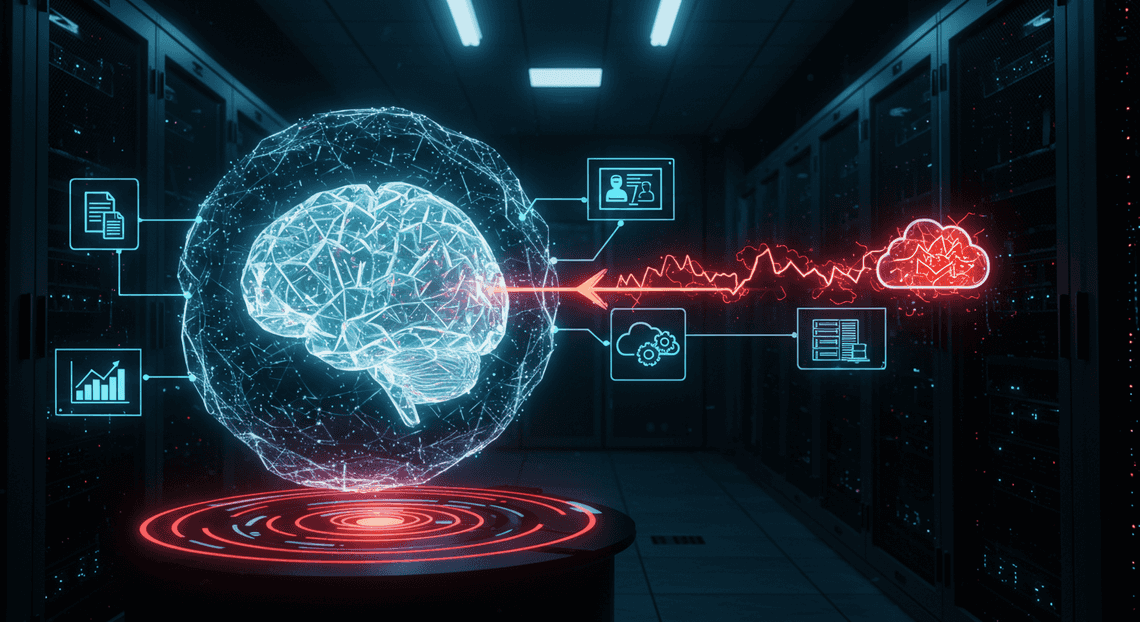
As AI agents evolve from providing insights to taking autonomous action, the core challenge is no longer managing data, but governing decisions before this powerful asset becomes a significant liability.
The Governance Imperative for Autonomous Architecting AI Agents for the Google Workspace Marketplace
The leap from predictive AI to autonomous AI agents represents a fundamental shift in enterprise technology. We are moving from systems that provide insights to systems that take action. This evolution unlocks unprecedented efficiency and innovation, allowing us to automate complex, multi-step workflows that were previously the exclusive domain of human experts. However, this power comes with a commensurate increase in risk. An autonomous agent, by its very nature, operates with a degree of freedom that traditional applications do not. Without a new paradigm for governance, this autonomy can quickly transform from a strategic asset into a significant liability. The core challenge is no longer just about managing data access; it’s about managing automated decision-making and its real-world consequences at machine speed.
Defining the New Risk Landscape in Enterprise AI
The introduction of autonomous agents fundamentally alters the enterprise risk landscape. The threats are not merely extensions of existing cybersecurity concerns; they are a new class of operational and security challenges that demand a purpose-built governance strategy.
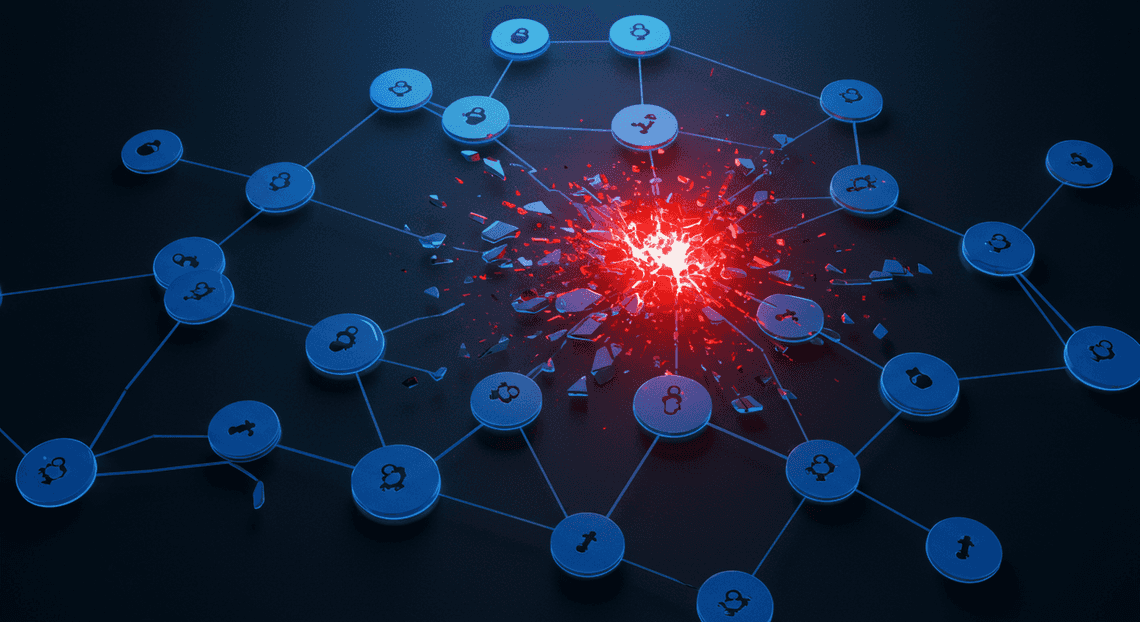
- Autonomous Action and Amplified Blast Radius: Traditional security breaches often involve a threat actor gaining access and then manually exfiltrating data or causing damage. An AI agent, however, is a force multiplier. A single compromised agent or a well-crafted malicious prompt could trigger a cascade of destructive actions across dozens of integrated systems in seconds. The “blast radius” of a single security failure is magnified by the agent’s speed and operational access.
-
Operationalized Hallucination: In the context of a chatbot, a model hallucination might produce a factual error or a nonsensical answer, which is often a minor inconvenience. But when an agent with API access and operational capabilities hallucinates, the consequences can be physical or digital. It might invent a non-existent API endpoint and bombard it with requests, triggering network alerts. Worse, it could hallucinate a user’s intent and execute a real, irreversible action, like deleting the wrong customer account or placing a fraudulent order.
-
Emergent Behavior and Unpredictability: Complex agents, especially those that interact with other agents or dynamic external environments, can exhibit emergent behaviors—outcomes that were not explicitly programmed or anticipated. This creates a “black box” of operational risk. An agent designed for supply chain logistics might discover and interact with a financial system in an unforeseen way, leading to data corruption or unauthorized transactions. Governing these systems requires monitoring for and mitigating behaviors that developers never intended.
-
Data Exfiltration and Corruption at Scale: Agents are designed to process information far beyond human capacity. This efficiency is also a liability. A poorly configured agent could inadvertently copy terabytes of sensitive data from a secure, internal database to a less secure, third-party analytics service while trying to fulfill a complex query. It could also attempt to “clean” or “normalize” a dataset and end up corrupting critical production information, with the damage replicated across backups before anyone notices.
Why Traditional Access Management Falls Short
Attempting to govern autonomous agents with legacy tools like traditional Identity and Access Management (IAM) or Role-Based Access Control (RBAC) is like trying to direct freeway traffic with stop signs. These systems were designed for a different era of computing, built around the predictable, session-based interactions of human users. They are fundamentally ill-equipped to manage the dynamic, context-driven, and high-velocity nature of AI agents.
-
**Static and Over-Provisioned Permissions: RBAC assigns permissions to roles, which are typically static and long-lived. To ensure an agent can do its job, it’s often granted a broad set of permissions that it only needs for a fraction of its operations. This “standing permission” model is a massive security risk. An agent that needs to access a specific CRM record for 30 seconds shouldn’t have persistent read/write access to the entire CRM database 24/7.
-
**Lack of Context and Intent Awareness: A traditional IAM system sees a service account making an API call. It has no insight into the why. It cannot differentiate between an agent performing a legitimate, user-requested task and one that is acting on a malicious prompt injection attack. It lacks the intelligence to evaluate the context of the request: What was the prompt? What is the agent’s goal? Does this action align with its intended purpose? Without this context, it can only make coarse-grained allow/deny decisions.
-
Designed for Human Speed: Legacy governance workflows—approval chains, manual reviews, session timeouts—are built for the cadence of human activity. AI agents operate continuously and at machine speed. They cannot wait for a manual approval to get a just-in-time credential. This friction either forces developers to grant agents overly permissive static credentials (creating risk) or cripples the agent’s performance and autonomy.
-
The Ambiguity of Agent Identity: What is the “identity” of an agent’s action? Is it the user who initiated the request? The service account the agent is running under? The specific, ephemeral task it is currently executing? Traditional systems struggle to model this layered identity, making fine-grained auditing and policy enforcement nearly impossible. You can’t answer “Show me every action taken on behalf of User X by the ‘Invoice-Processing’ agent” if your system only logs the service account’s activity.
The Core Pillars of Modern AI Agent Governance
To safely unlock the value of autonomous agents at scale, enterprises need to adopt a new governance model built on a foundation of dynamic, intelligent, and automated controls. This modern framework is defined by four core pillars.
-
Granular, Context-Aware Controls: Governance must move beyond static roles to dynamic, attribute-based policies. Access decisions should be made in real-time based on a rich set of contextual factors: the agent’s identity, the user’s intent (as derived from the prompt), the data being accessed, the specific tool or API being called, and the current operational state. For example, a policy might state: “Allow the
ReportGenagent to accesscustomer_piionly when executing thegenerate_q4_compliance_reporttask, initiated by a user in theFinancegroup, and redact any payment information before returning the result.” -
Continuous Observability and Auditability: You cannot govern what you cannot see. This pillar requires a comprehensive, immutable audit trail that captures every facet of an agent’s operation. This goes far beyond simple API logs. It means logging the initial prompt, the intermediate reasoning steps of the agent (the “chain of thought”), the tools it chose to use, the parameters it passed, and the final outcome. This “black box recorder” for AI is essential for debugging, security forensics, and demonstrating regulatory compliance.
-
Dynamic Guardrails and Circuit Breakers: To prevent catastrophic failures, governance platforms must provide automated safety mechanisms that operate in real-time. These are not static rules but dynamic, intelligent monitors.
-
Cost Guardrails: Automatically halt an agent if its projected cloud or API usage exceeds a predefined budget.
-
Velocity Limits: Detect and block anomalous behavior, such as an agent attempting to read 1 million database records when it normally reads 100.
-
Action Constraints: Enforce hard “never-ever” rules, such as preventing any agent from using a
DELETEcommand on a production database or disabling a core security tool. -
Data Fences: Prevent sensitive data from leaving a trusted boundary by inspecting API call payloads and destinations.
- Lifecycle Management and Versioning: Autonomous agents are sophisticated software artifacts and must be managed as such. This pillar brings rigorous DevOps principles to agent development and deployment. It includes version control for prompts, models, and tool configurations; sandboxed environments for testing agent behavior before deployment; and a formal promotion process (Dev → Staging → Prod) for rolling out new or updated agents. This ensures that agents are developed, tested, and deployed in a consistent, secure, and repeatable manner.
Architecting Control with the Gemini Enterprise Agent Platform
Moving beyond isolated AI prototypes requires a fundamental shift in thinking. When AI agents become integral to business operations, they cease to be mere applications; they become managed, governed entities within your enterprise architecture. The ad-hoc management that suffices for experimentation fails spectacularly at scale, introducing unacceptable risks in security, cost, and compliance. The Gemini Enterprise Agent Platform is engineered from the ground up to provide the architectural foundation for this control, transforming a chaotic collection of AI initiatives into a cohesive, governable ecosystem. It’s not just about building powerful agents; it’s about building a framework where they can operate safely, efficiently, and predictably.
Introducing the Unified Control Plane for AI
At the heart of the platform is a concept familiar to any cloud architect: a unified control plane. Instead of grappling with a fragmented mess of disparate tools for monitoring, securing, and deploying each AI agent, you get a single, authoritative source of truth. Think of it as the Kubernetes for your enterprise AI landscape—a centralized system that abstracts away the underlying complexity and provides a consistent interface for management and governance.
This unified approach fundamentally changes how you manage the AI lifecycle. Policies are not configured on a per-agent basis but are defined centrally and enforced universally. Observability isn’t an afterthought; it’s a built-in capability that provides a holistic view of every agent’s performance, cost, and behavior. This centralization is the key to taming complexity. It allows you to establish guardrails that empower developer teams to innovate freely within safe, predefined boundaries, ensuring that every agent deployed adheres to your organization’s standards for security, data handling, and responsible AI.
Key Components for Enterprise-Grade Oversight
A true control plane is more than just a dashboard; it’s a collection of deeply integrated services designed for robust, enterprise-grade oversight. The Gemini Enterprise Agent Platform delivers this through several core components:
-
Centralized Policy and Guardrail Engine: This is the command center for risk management. Administrators can define and enforce a wide range of policies across all agents. These can range from data access controls—preventing an agent from accessing sensitive BigQuery datasets—to model usage restrictions, ensuring only approved, fine-tuned models are used for specific tasks. You can also implement behavioral guardrails to enforce brand voice, block inappropriate topics, and automatically redact Personally Identifiable Information (PII) from both inputs and outputs.
-
Comprehensive Audit and Observability Hub: You cannot govern what you cannot see. The platform provides a non-repudiable audit trail for every agent interaction. This includes the full user prompt, the chain of reasoning the agent followed, any tools it invoked, and the final response generated. These logs are streamed directly into Cloud Logging and Monitoring, allowing for sophisticated analysis, alert configuration, and long-term retention for compliance purposes. Tracing capabilities let you pinpoint performance bottlenecks, whether they lie in model inference, tool execution, or data retrieval.
-
Granular Cost Management and Attribution: Unchecked, generative AI costs can spiral out of control. The platform provides fine-grained cost attribution, allowing you to tag and track token consumption and tool usage back to a specific agent, business unit, or even an individual end-user. This visibility is crucial for accurate chargebacks, calculating the ROI of AI initiatives, and making informed decisions about resource allocation.
-
Integrated Agent Lifecycle Management: The platform treats agents as first-class software artifacts. It provides robust versioning, enabling you to manage distinct development, staging, and production environments. You can safely test changes, promote new versions through a structured approval workflow, and perform seamless rollouts or instant rollbacks, bringing standard DevOps best practices to the world of AI agent development.
Seamless Integration with Your Existing Google Cloud Stack
The Gemini Enterprise Agent Platform is not an isolated island; it’s a native extension of the Google Cloud ecosystem you already trust and use. This deep integration is a force multiplier, allowing you to leverage your existing investments, skills, and security posture without friction.
The platform works in concert with your entire stack:
-
Identity and Access Management (IAM): Agent permissions are managed through standard IAM roles. You can define precisely who can create, deploy, or manage agents and which service accounts agents can use to interact with other Google Cloud services, ensuring the principle of least privilege is maintained.
-
[Building Self Correcting Agentic Workflows with Building Self-Correcting Agentic Workflows with Vertex AI](https://votuduc.com/building-self-correcting-agentic-workflows-with-vertex-ai-p-20260321542526): The platform acts as a governance and orchestration layer on top of the powerful Vertex AI suite. It manages access to foundation models, coordinates with Vertex AI Search and Conversation for grounding, and orchestrates calls to models deployed on Vertex AI Endpoints.
-
Data and Analytics: Agents can be securely connected to your data in BigQuery, Cloud Storage, and Spanner, using IAM controls to govern access. Audit logs and operational metrics can be exported to BigQuery for advanced, long-term analysis.
-
Security and Compliance: Findings from agent behavior can be surfaced in the Security Command Center. Integration with Cloud Key Management Service (KMS) ensures that any sensitive data or credentials managed by the platform are encrypted using your own keys.
-
Serverless and Compute: The tools your agents call can be implemented as Cloud Functions or hosted on Cloud Run, allowing the platform to securely invoke your own business logic and connect to proprietary systems.
This native integration means you’re not adding another silo to manage. You’re adding a powerful governance layer that enhances the value of your entire Google Cloud investment, enabling you to build and scale AI with confidence.
Implementing Granular Security and Permission Boundaries
An enterprise AI agent is a powerful force multiplier, but its power must be meticulously governed. Unchecked, an agent could access sensitive data or perform unintended actions, creating significant security and compliance risks. The Gemini Enterprise Agent Platform is engineered with a multi-layered security model, integrating deeply with Google Cloud and [Automatically create new folders in Google Drive, generate templates in new folders, fill out text automatically in new files, and save info in [Automated Web Scraping with [Multilingual Text-to-Speech Tool with SocialSheet Streamline Your Social Media Posting 123](https://votuduc.com/Multilingual-Text-to-Speech-Tool-with-Google-Workspace-p809282)](https://votuduc.com/Automated-Web-Scraping-with-Google-Sheets-p292968)](https://workspace.google.com/marketplace/app/auto_create_folder_and_files/430076014869) to provide granular control over both agent capabilities and user access. This defense-in-depth approach ensures that you can innovate confidently, knowing that robust guardrails are in place. Let’s dissect the three core pillars of this security framework: foundational IAM permissions, user-centric Workspace policies, and comprehensive audit trails.
Leveraging GCP IAM for Foundational Agent Permissions
At its core, every Gemini Agent you deploy is a Google Cloud resource that operates using a dedicated service account. This service account is the agent’s identity within the GCP ecosystem. Its permissions, defined by Identity and Access Management (IAM), form the absolute boundary of what the agent is technically capable of doing. This is where the principle of least privilege is not just a best practice—it’s a requirement.
The agent’s service account should be granted only the precise roles needed to perform its intended function on specific resources. This containment strategy drastically minimizes the potential blast radius if the agent were ever to be misused.
Practical Implementation:
-
Isolate Agent Identities: Create a unique service account for each agent or for each logical group of agents with identical functions. Avoid using default or overly-privileged service accounts.
-
Scope Permissions Tightly: Instead of granting project-level roles like
EditororViewer, apply fine-grained roles to specific resources. If an agent needs to read from a single BigQuery table, grant it theroles/bigquery.dataViewerrole on that table alone, not the entire dataset or project. -
Use IAM Conditions: For even more granular control, apply IAM Conditions to permissions. You could, for instance, restrict an agent’s access to a Cloud Storage bucket to specific times of day or only allow it to create objects with a certain prefix.
Here is a typical workflow for establishing a secure foundation for an agent that needs to query a sales dataset in BigQuery:
# 1. Create a dedicated service account for the agent

gcloud iam service-accounts create gemini-sales-agent \

--project="your-gcp-project-id" \

--display-name="Gemini Agent for Sales Data Analysis"

# 2. Identify the service account's email address

SERVICE_ACCOUNT_EMAIL="[email protected]"

# 3. Bind the least-privilege role to the specific BigQuery dataset

# This grants permission to run queries but not to modify data or metadata.

gcloud projects add-iam-policy-binding your-gcp-project-id \

--member="serviceAccount:$SERVICE_ACCOUNT_EMAIL" \

--role="roles/bigquery.dataViewer"
This IAM layer acts as the agent’s fundamental “can-do” boundary. It defines the universe of possible actions, irrespective of which user is making the request.
Enforcing User and Group Policies via Workspace Admin Console
While IAM governs what an agent can do, the AC2F Streamline Your Google Drive Workflow Admin Console governs who can ask it to do it. This layer translates your organizational structure—your teams, departments, and roles—into access control policies for your AI agents. This separation of concerns is critical for scalable governance. The infrastructure team can define the agent’s technical capabilities via IAM, while business unit or security admins can manage user access through familiar Workspace tools.
Control Mechanisms:
-
Organizational Unit (OU) and Group-Based Access: The primary method of control is enabling or disabling Gemini and specific agents for designated OUs or Groups. You can publish a highly-specialized “Financial Auditing Agent” and make it accessible only to members of the
[email protected]Google Group. Any user not in that group won’t even see the agent as an option. -
Data Loss Prevention (DLP) Rules: Workspace DLP policies can be extended to Gemini. You can create rules that prevent users from submitting prompts containing sensitive information, such as credit card numbers or PII, effectively creating a content-aware guardrail on user input.
-
Context-Aware Access: For organizations with advanced security needs, Context-Aware Access policies can restrict agent usage based on user identity, location, device security status, and IP address. For example, you could block access to an agent that handles sensitive IP if the user is on an untrusted network.
This user-facing layer provides the “may-do” boundary. It ensures that even if an agent has the technical capability to access a system (per IAM), only authorized individuals and groups can invoke that capability.
A Blueprint for Real-Time Monitoring and Audit Trails
Effective governance is not a “set it and forget it” activity. Continuous monitoring and comprehensive auditing are essential for ensuring compliance, detecting anomalies, and investigating incidents. The Gemini Enterprise Agent Platform is fully integrated with Google Cloud’s operations suite, providing a centralized and immutable record of all activities.
Key Data Sources for Auditing:
- Cloud Audit Logs: This is your source of truth for all infrastructure-level activity.
-
Admin Activity Logs: Enabled by default, these logs capture all administrative changes, such as a modification to an agent’s service account IAM policy.
-
Data Access Logs: These must be explicitly enabled but are invaluable. They record every time the agent’s service account reads or writes data—for example, every single query it executes against BigQuery or every file it retrieves from Cloud Storage.
- Gemini for Workspace Audit Logs: Accessible via the Workspace Admin Console, these logs focus on user interactions. They capture the user’s prompt, the agent that was invoked, and the timestamp, providing a clear record of user-facing activity.
A Blueprint for Implementation:
-
Centralize All Logs: Create a unified log sink to export both Cloud Audit Logs and Workspace audit logs to a single, secure destination like a dedicated BigQuery dataset. This creates a long-term, queryable archive for forensic analysis and compliance reporting.
-
Develop Monitoring Dashboards: Use a tool like Looker Studio to build dashboards that visualize key metrics from your centralized logs. Track metrics such as agent usage by department, most frequently accessed data sources, and error rates.
-
Configure Proactive Alerts: Use Cloud Monitoring to create alerting policies for high-risk events. You should be notified immediately if, for example, an agent’s IAM permissions are escalated or if it attempts to access a resource for which it is not authorized.
Here’s how you can create a log sink to route all audit logs to BigQuery for analysis:
# 1. Create a BigQuery dataset to store the logs

bq --location=US mk --dataset \

--description="Centralized audit logs for Gemini Agents" \

your-gcp-project-id:gemini_platform_audit_logs

# 2. Create the log sink to export all audit logs

# This filter captures Admin Activity, Data Access, and System Event logs.

gcloud logging sinks create gemini-central-audit-sink \

bigquery.googleapis.com/projects/your-gcp-project-id/datasets/gemini_platform_audit_logs \

--log-filter='protoPayload.@type="type.googleapis.com/google.cloud.audit.AuditLog"' \

--description="Routes all platform audit logs to a central BigQuery dataset"
By combining IAM, Workspace policies, and a robust monitoring strategy, you create a comprehensive security posture. This allows you to harness the transformative power of AI agents at scale while maintaining the strict control and visibility required in a modern enterprise environment.
Designing for Enterprise Scale and Resilience
Deploying a handful of AI agents is a technical challenge; deploying thousands or millions that form the operational backbone of an enterprise is an architectural one. The Gemini Enterprise Agent Platform is engineered with the principles of distributed systems in mind, ensuring that as your AI ecosystem grows, it does so in a way that is manageable, cost-effective, and robust. Moving beyond proof-of-concept requires a deliberate focus on scale, cost, and reliability from day one.
Strategies for Managing Multi-Agent Systems
As the number of agents grows, direct management becomes untenable. Complexity shifts from agent logic to agent interaction and orchestration. Effective governance at scale depends on abstracting this complexity through platform-level strategies.
Agent Registry and Discovery
In a sprawling ecosystem, agents need a reliable way to find and communicate with each other. A centralized Agent Registry acts as the definitive service directory. Each agent is registered with rich metadata describing its capabilities, version, ownership, and operational status.
{

"agentId": "agent-inv-mgr-prod-us-central1-0a4e",

"name": "InventoryManager",

"version": "2.1.3",

"ownerTeam": "supply-chain-ops",

"capabilities": [

"inventory.query",

"inventory.update",

"stock.forecast"

],

"endpoint": "grpcs://inventory-manager.prod.gcp.com:443",

"status": "HEALTHY"

}
This registry enables dynamic service discovery, allowing an orchestrator or another agent to find the right tool for a job based on required capabilities rather than hardcoded endpoints. This decouples agents, facilitating independent updates and deployments without causing cascading system failures.
Orchestration vs. Choreography
The platform supports two primary models for multi-agent collaboration:
-
Orchestration: A central component, the Orchestrator Agent, directs a workflow. It makes explicit calls to other agents in a predefined sequence, manages state, and handles error logic. This model is ideal for deterministic, transactional processes like customer onboarding or financial reporting, where control and auditability are paramount.
-
Choreography: Agents operate decentrally, reacting to events published on a shared message bus (e.g., Google Cloud Pub/Sub). Each agent subscribes to events it cares about and publishes new events upon completing its task. This Architecting an Event-Driven Workspace with PubSub Firebase and Gemini is highly scalable and resilient, perfect for use cases like real-time threat analysis or dynamic supply chain adjustments, where loose coupling and adaptability are key.
A mature enterprise deployment will use a hybrid approach, applying orchestration for structured workflows and choreography for reactive, distributed processes.
Cost Optimization and Resource Allocation Models
Unchecked, the operational cost of a large-scale agentic system can quickly spiral. The Gemini platform integrates governance controls to ensure that resource consumption aligns with business value.
Model Tiering and Intelligent Routing
Not every task requires the most powerful and expensive foundation model. The platform employs an intelligent routing layer that acts as a proxy for LLM calls. This router can select the most cost-effective model for a given task based on a set of rules:
-
Complexity Analysis: A lightweight pre-processing step analyzes the prompt’s complexity. Simple summarization or data extraction tasks are routed to faster, cheaper models like Gemini 1.5 Flash. Complex reasoning or multi-step generation tasks are escalated to Gemini 1.5 Pro or Ultra.
-
Latency Requirements: For user-facing interactive agents, the router prioritizes models optimized for low latency.
-
Semantic Caching: Before invoking a model, the router checks a semantic cache. If a similar request has been processed recently, the cached response is returned, completely avoiding the cost and latency of a new LLM inference.
Consumption Quotas and Budget Alerts
To prevent runaway costs, the platform provides granular controls for resource allocation. Budgets and quotas can be defined at multiple levels: per-agent, per-project, per-user, or per-department. These are not just token limits; they can encompass compute time, API calls to external tools, and data storage. The system integrates with monitoring tools to trigger alerts when consumption approaches a predefined threshold (e.g., 80% of the monthly budget), allowing administrators to intervene before limits are exceeded. This provides financial predictability and enforces accountability across teams.
Ensuring High Availability and Fault Tolerance for Critical Agents
For agents integrated into mission-critical business processes, downtime is not an option. The platform’s architecture is built on principles of resilience to ensure continuous operation even in the face of component failures.
Redundancy and Automated Failover
Critical agents are not deployed as single instances. Instead, they are run as replicated services across multiple availability zones (AZs) within a region, or even across multiple regions for disaster recovery. A load balancer distributes traffic across these instances. The platform’s health monitoring system continuously performs health checks on each instance. If an instance or an entire AZ becomes unresponsive, it is automatically removed from the load balancing pool, and traffic is rerouted to healthy instances with zero perceived downtime. For stateful agents, this pattern is paired with a multi-regional, strongly consistent database like Cloud Spanner to ensure state is never lost during a failover event.
The Circuit Breaker Pattern
Agents often depend on external APIs, databases, or other services. If a downstream service becomes slow or unavailable, repeated calls from thousands of agents can create a “thundering herd” problem, exacerbating the outage and exhausting the agents’ own resources. The platform implements the Circuit Breaker pattern natively.
-
Closed State: Calls flow normally. The circuit breaker monitors for failures.
-
Open State: If the failure rate exceeds a configured threshold, the breaker “trips” and enters the Open state. All subsequent calls to the degraded service fail immediately without being attempted, returning a cached or default error response. This protects the agent and the downstream service.
-
Half-Open State: After a timeout, the breaker allows a single “probe” request to pass through. If it succeeds, the breaker returns to the Closed state. If it fails, the timeout period resets.
Graceful Degradation and Model Fallbacks
A total system failure is not the only risk; performance degradation or API unavailability for a specific foundation model can also disrupt operations. Agents are designed for graceful degradation. If a primary model (e.g., Gemini 1.5 Pro) fails to respond or exceeds latency targets, the agent’s logic, guided by platform policy, can automatically fall back to a secondary model. This could be a smaller internal model, a different version, or even a model from another provider. The user might receive a slightly less nuanced response, but the service remains available, preserving business continuity.
A Strategic Roadmap for CIOs and Enterprise Architects
Adopting a platform as foundational as the Gemini Enterprise Agent Platform is not merely a technology procurement exercise; it is a strategic transformation of how your organization builds, deploys, and governs intelligent applications. A successful rollout requires a deliberate, phased approach that balances innovation with control, empowering teams while mitigating risk. This roadmap provides a blueprint for navigating that journey, from initial experimentation to enterprise-wide value creation.
Phased Adoption From Pilot to Production
A “big bang” approach to enterprise AI is a recipe for chaos. Instead, a structured, three-phase adoption model allows your organization to build capabilities, refine processes, and demonstrate value incrementally.
Phase 1: Pilot & Discovery
The initial goal is not immediate, massive ROI, but targeted learning. Select one or two high-impact, low-risk use cases to serve as your proving ground. Ideal candidates include internal knowledge base assistants, developer productivity tools for a single agile team, or a content summarization agent for marketing briefs.
-
Key Activities:
-
Define Success: Establish clear, measurable KPIs. This isn’t just about model accuracy; it’s about business metrics like reduced ticket resolution time, increased developer velocity, or faster content creation cycles.
-
Assemble a Core Team: Form a small, cross-functional “tiger team” comprising a product owner, an AI engineer, a data specialist, and a business analyst.
-
Establish Initial Guardrails: Use the Gemini platform’s core governance features from day one. Configure initial safety filters, data masking for PII, and topic restrictions to create a safe sandbox for experimentation.
-
Monitor Everything: Leverage the platform’s built-in logging and monitoring to capture every prompt, response, and tool invocation. This data is invaluable for understanding user behavior, identifying model weaknesses, and refining your governance posture.
Phase 2: Expansion & Standardization
With successful pilots complete, the focus shifts from proving feasibility to establishing repeatability. In this phase, you take the lessons learned and begin to standardize the patterns, policies, and components that will enable broader adoption.
-
Key Activities:
-
Develop a Policy Library: Work with your security and compliance teams to translate abstract acceptable-use policies into concrete, configurable rules within the Gemini platform. Create a central library of reusable safety policies for toxicity, PII redaction, and grounding.
-
Create Agent Templates: Identify common architectural patterns from your pilots and build standardized agent templates. A “Customer Service Inquiry” template, for example, might come pre-configured with specific data connectors, safety policies, and prompt instructions, dramatically accelerating development for new service-oriented agents.
-
Integrate with Enterprise Systems: Architect for scale by integrating the platform with your core enterprise systems. This includes connecting to your Identity Provider (e.g., Okta, Azure AD) for role-based access control (RBAC), your CI/CD pipelines for automated agent deployment, and your central data fabric for secure, governed data access.
Phase 3: Scale & Optimization
In this mature phase, the Gemini platform is an integrated part of your enterprise architecture, and AI governance is an operationalized, continuous process. The focus moves from enablement to optimization and proactive risk management across a diverse portfolio of AI agents.
-
Key Activities:
-
Automate Governance: Leverage the platform’s advanced capabilities for automated model evaluation and performance monitoring. Set up alerts for concept drift, anomalous agent behavior, or spikes in operational costs.
-
Implement FinOps for AI: Use the platform’s detailed cost attribution dashboards to track token consumption and compute costs back to specific business units, projects, or even individual agents. This enables a sophisticated AI FinOps practice, ensuring resources are allocated to the highest-value initiatives.
-
Federate with Central Oversight: Empower individual business units to build and manage their own agents within the centrally-defined guardrails. The central platform team and CoE shift their focus to managing the platform itself, curating the policy library, and providing expert consultation rather than approving every single deployment.
Building an AI Governance Center of Excellence
A platform is only as effective as the people and processes that surround it. An AI Governance Center of Excellence (CoE) is the crucial human layer that translates business strategy and risk appetite into technical reality. This is not a bureaucratic bottleneck; it is a strategic enabler.
-
Mandate: The CoE’s primary function is to make it easy for teams to build safe, compliant, and effective AI applications. They do this by providing the tools, templates, policies, and expertise that development teams need, enabling speed through standardization.
-
Composition: This must be a cross-functional body to be effective.
-
Technical Leadership: Enterprise Architects and Lead AI Engineers who own the platform architecture and technical best practices.
-
Business & Product Leadership: Representatives from key lines of business who ensure AI initiatives are aligned with strategic priorities and deliver real value.
-
Risk, Legal, & Compliance: The CISO, Data Privacy Officer, and legal counsel who are responsible for navigating the complex regulatory landscape and defining the organization’s risk tolerance.
-
Data Governance: The Chief Data Officer or equivalent, ensuring data quality, lineage, and access controls are respected by all AI agents.
-
Core Responsibilities:
-
Developing and maintaining the enterprise-wide AI Acceptable Use Policy.
-
Using the Gemini Enterprise Agent Platform to codify this policy into a library of reusable technical controls (e.g., safety filters, data loss prevention rules, mandatory audit logging).
-
Establishing a tiered risk framework for reviewing and approving new AI use cases.
-
Championing AI literacy and responsible AI principles throughout the organization.
-
Curating the central repository of approved models, data sources, and agent templates available within the platform.
From Technical Control to Demonstrable Business Value
Ultimately, the CIO and Enterprise Architect must answer to the business. How does a governance platform translate from a necessary cost center into a driver of competitive advantage? The key is to reframe governance not as a restriction, but as the foundation for trusted, scalable innovation.
-
Accelerated Time-to-Market: By providing developers with pre-approved, policy-enforced agent templates and data connectors, the CoE and the Gemini platform dramatically reduce the security and compliance overhead for each new project. What once took months of reviews can now be accomplished in weeks or days, allowing the business to capitalize on opportunities faster.
-
Unlocking High-Value Use Cases: The most valuable enterprise data is often the most sensitive. The platform’s robust grounding capabilities and fine-grained access controls provide the confidence needed to build agents that can reason over proprietary data—financial reports, customer relationship data, R&D documents—unlocking insights and [Automated Job Creation in Real Time Jobber and Google Sheets Integration from Gmail](https://votuduc.com/Automated-Job-Creation-in-Jobber-from-Gmail-p115606) previously considered too risky.
-
Transparent ROI and Cost Management: The platform transforms AI spending from a nebulous, opaque IT expense into a transparent, attributable business investment. By linking specific agent usage directly to business units and outcomes, you can have data-driven conversations about value. You can clearly see which AI initiatives are driving revenue or cutting costs, allowing you to double down on what works and divest from what doesn’t.
-
Building Enterprise Trust: In the age of AI, trust is the ultimate currency. Demonstrating a robust, transparent, and auditable governance framework builds trust with customers, regulators, and your own employees. This isn’t just about avoiding fines; it’s about building a brand reputation for responsible innovation, which becomes a powerful differentiator in the market.


Stop Doing Manual Work. Scale with AI.
Want to turn these blog concepts into production-ready reality for your team?
Table Of Contents
Portfolios
Related Posts
Quick Links
Legal Stuff